
Triadic Intelligence™ · Essay
The Soul in Three Dimensions
Mastering a Psychological Model of the Human Soul Through the Lens Triad Stacking Method
How Triadic Intelligence turns the “soul” from a vague metaphor into a clear map for self-knowledge, support, and growth
By Dr. Alex Zolotov, Ph.D.

|
|
FOUNDATION OF THE METHOD This article continues a series based on Dr. Alex Zolotov, Ph.D.’s book Triadic Intelligence: Designing Reality With the Lens Triad. The book on Amazon: amazon.com/dp/B0FPX9B59G This is the abridged edition: it contains no formulas or calculations—only meaning, the model’s logic, and what each index helps us see. The full version, with formulas and calculations, is available separately for professionals. |

Contents
Instead of an Introduction: Why We Are Talking About the Soul Again
1. What Is a Psychological Model of the Soul?
2. Why This Matters Especially Today
3. What Science Says
4. The “Ψ-Soul” Model: Three Lenses and 27 Cells
5. Soul Indices: What They Show
6. Seven Forms of the Soul
7. Three Views of the Soul: From Within, From Outside, and Through Behavior
8. Three Levels of Help: Restore, Balance, Elevate
9. Anna’s Plan: From Assessment to Change
10. The Soul Article as an Umbrella for the Entire Series
11. Testing Across 22 Countries: The Global Flourishing Study
12. The Web Tool and Checklist
13. Model Boundaries and Ethics
Conclusion · References
Instead of an Introduction: Why We Are Talking About the Soul Again
In forty years of practice, I have almost never heard a client say, “My affect regulation is impaired.” People speak differently: “My soul hurts,” “I feel empty,” “I feel deeply unsettled,” “I have lost myself.” The language of the soul is our first language of suffering and our first language of hope.
Twentieth-century scientific psychology largely abandoned this word, leaving it to theologians and poets. Yet the subject itself never disappeared—only its name did. A person does not suffer through their “limbic system,” but as a whole: through body, feelings, and meaning.
This article proposes bringing the concept of the soul back into professional conversation—not as a metaphysical assertion, but as a psychological model: a clear description of inner life that can be observed, compared over time, and gently improved. Its tool is the Triadic Intelligence method—the stacking of lens triads. [1]
“A healthy soul is not one that contains ‘a great deal of goodness,’ but one whose three principles are balanced, directed toward constructive ends, and governed by free choice.”
|
|
WHAT WE DO AND WHAT WE DO NOT DO We are not measuring the soul as a metaphysical substance or settling the question of its immortality. We describe how the soul manifests in experience: in needs, feelings, meanings, choices, and development. The model therefore works with equal integrity for believers, agnostics, and materialists. |

1. What Is a Psychological Model of the Soul?
A psychological model of the soul describes a person’s inner world as an integrated system in which four things become visible: the principles that make up inner life, where it is directed—toward construction or destruction—who makes choices within it, and how it develops over time.
Such a model differs from a theological doctrine because its claims can be tested: each element corresponds to observable manifestations and, in the future, validated questionnaires.
The Soul Is Triadic: From Plato to Neuroscience
The most striking observation when reviewing the sources is the recurring threefold structure. In Plato’s Republic, the soul consists of rational, spirited, and appetitive parts; justice within the soul emerges when each part does its work and reason rules. [2] [3]
|
Tradition / Author |
Three Principles of the Soul |
What Unites Them |
|---|---|---|
|
Plato |
Rational, spirited, appetitive |
Justice: reason rules |
|
Freud |
Id, ego, superego |
The ego as mediator |
|
Frankl |
Body, psyche, spirit |
Freedom and responsibility |
|
Damasio [4] |
Protoself, core self, autobiographical self |
The subject who “knows” |
|
McAdams [5] |
Traits, adaptations, life story |
An integrated identity |
|
Antonovsky [6] |
Comprehensibility, manageability, meaningfulness |
Sense of coherence |
|
Seklitova and Strelnikova |
Positive, negative, and governing parts |
The governing part |
|
|
TRIADIC INSIGHT The authors use different language, but share the same logic. Almost invariably, there is a bodily-vital principle (drives and needs), an emotional-volitional principle (feelings, courage, energy), and a meaning-oriented principle (reason, values, conscience, spirit). And almost invariably, there is a fourth—the governing element: Plato’s rule of reason, Freud’s ego, self-regulation in contemporary psychotherapy. We are not imposing a threefold structure on the soul—we are discovering it. When twenty-five centuries of independent observations converge on one form, it is more than coincidence; it is a clue. |
One Complaint—Four Different Souls
|
Case |
How It Sounds |
What Happens in the Model |
|---|---|---|
|
Burnout |
“I understand everything, but I feel nothing” |
Meaning remains, but body and feelings are depleted—an imbalance of principles |
|
Moral injury [7] |
“I betrayed what I believe in” |
A gap between values and actions—orientation is distorted [8] |
|
Existential vacuum |
“I have everything, but nothing to live for” |
An empty meaning-oriented principle; energy flows into addictive loops |
|
“A good person without a steering wheel” |
“I cannot say no” |
The principles are sound, but governance is absent |
|
|
PSYCHOTHERAPIST’S COMMENTARY The same phrase—“I feel troubled in my soul”—can conceal four entirely different states. Each needs its own kind of help. A single overall “inner well-being” score is therefore insufficient—we need a map showing exactly where it hurts. |

2. Why This Matters Especially Today
- The scale of inner suffering. According to the WHO, more than a billion people worldwide live with mental disorders, while depression and anxiety cost the global economy approximately a trillion dollars a year. [9]
- The loneliness epidemic. The U.S. Surgeon General called loneliness a public health crisis. Loneliness is primarily the pain of disconnection—a category belonging to the soul’s inner life. [10]
- People still understand themselves through the soul. According to Pew Research Center, 83% of American adults believe that human beings have a soul or spirit beyond the physical body. Clients bring precisely this language into therapy. [11]
- Meaning is a health factor, not a luxury. Large meta-analyses link a sense of purpose in life to a lower risk of early death and cardiovascular events; in the UK Biobank cohort, meaningfulness is also associated with lower mortality. It is no coincidence that the Global Flourishing Study—more than 200,000 participants in 22 countries—examines meaning and character alongside health and money. [12] [13] [14] [15]
- The age of AI. Scientists do not yet regard current AI systems as conscious, but they see no fundamental technical barriers either. The more a machine resembles a human being, the more important it becomes to understand what in human beings cannot be reduced to computation. [16]
- Spirituality works in therapy. A meta-analysis found that therapy integrating clients’ religiosity reduces distress as effectively as standard therapy, while strengthening spiritual well-being more. [17]
“A model of the soul today is not a philosophical whim, but a practical task at the intersection of psychotherapy, public health, and technology.”
3. What Science Says
Contemporary research must be read honestly: established findings need to be separated from hypotheses and worldviews. The picture emerges from five areas.
- The return of the soul to academic psychology. In The Return of the Soul (Institute of Psychology, Russian Academy of Sciences, 2021), Academician V. D. Shadrikov called for restoring the soul as a subject of psychology: the world of inner life, where thought and meaning-making are central. In 2026, K. V. Anokhin and T. V. Chernigovskaya published The Brain and Its “Self,” exploring the nature of the self, soul, and consciousness. [18] [19]
- Philosophy of mind. Moreland and Rickabaugh defend the concept of the soul as an immaterial substance; neurosurgeon Michael Egnor argues that the brain alone cannot explain the mind. This is philosophical reasoning rather than a neuroscientific consensus—and it is not decisive for our model. [20] [21]
- The neuroscience of the self. Damasio shows how the self grows from bodily feelings into memory and a life story. Inner experience does not oppose the bodily; it grows out of it—which is why our model includes a vital principle. [22]
- Borderline states. AWARE-II recorded memories resembling conscious experience in some survivors of cardiac arrest; the authors themselves emphasize that the nature of these experiences has not been proved or disproved. [23] [24]
- Measurable “markers of the soul. ” Here, the evidence base is strongest: Antonovsky’s sense of coherence is associated with health and quality of life, the life story is a recognized level of personality, and moral injury is a clinical reality. These are the foundations on which the model rests. [25] [26] [27] [28]
4. The “Ψ-Soul” Model: Three Lenses and 27 Cells
The model stacks three Triadic Intelligence lenses. Each answers its own question; together they provide a multidimensional picture that no single lens can offer alone.
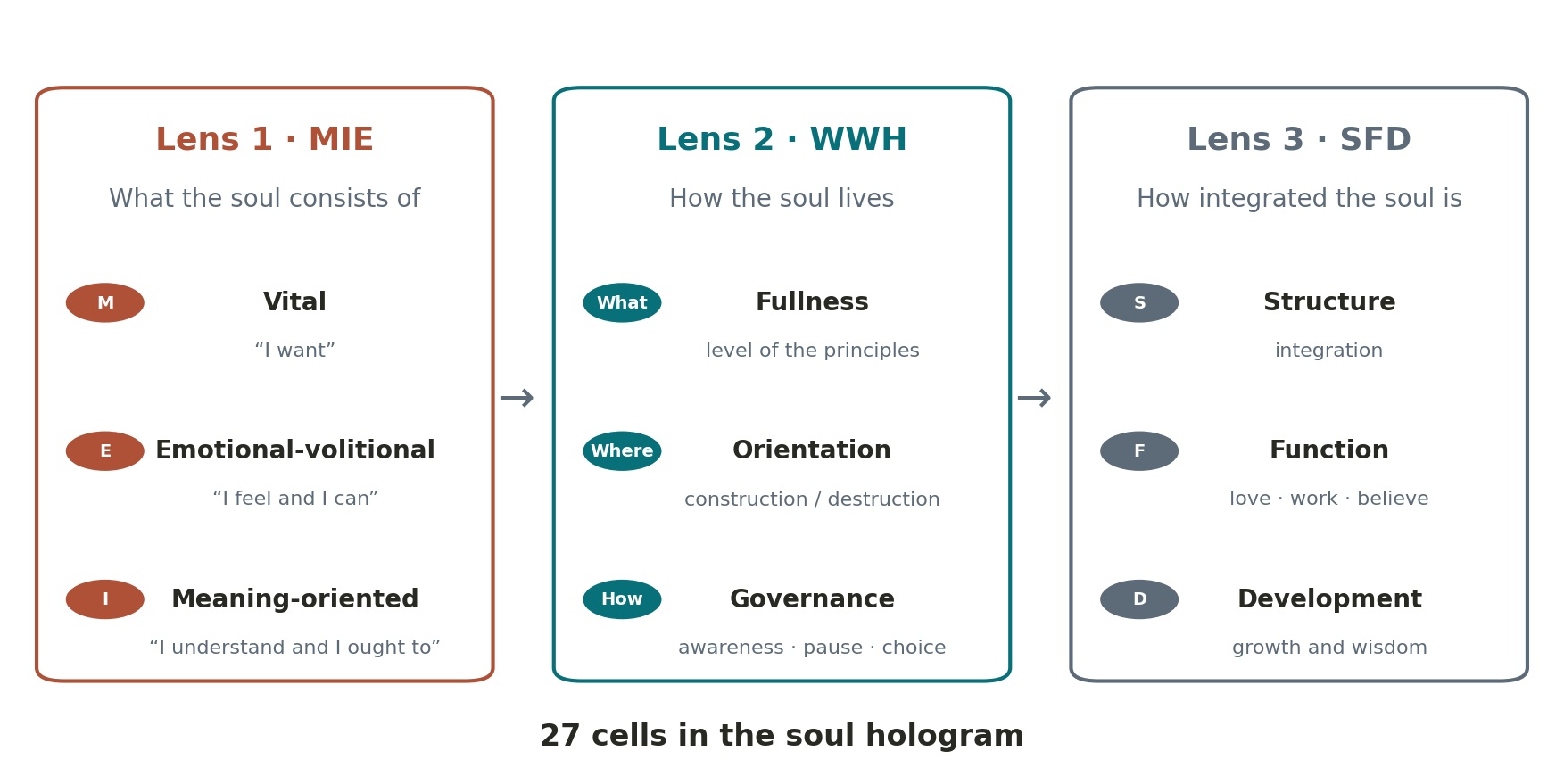
Fig. 1. The Three Lenses of the “Ψ-Soul” Model
Lens 1—What the Soul Consists Of
|
Principle |
What It Includes |
Voice |
|---|---|---|
|
M · Vital |
Body, needs, sleep, pleasure, vitality |
“I want” |
|
E · Emotional-volitional |
Feelings, attachments, courage, will, motivation |
“I feel and I can” |
|
I · Meaning-oriented |
Thought, values, conscience, faith, life story |
“I understand and I ought to” |
No principle is “higher” than another. Without the vital there is no life, without the emotional there is no movement, and without the meaning-oriented there is no direction.
Lens 2—How the Soul Lives
- What—fullness: how much strength each principle contains and how rich experience is.
- Where—orientation: toward construction (love, gratitude, care, forgiveness) or destruction (resentment, envy, contempt, self-abasement).
- How—governance: the ability to notice an impulse, maintain a pause, and make a choice aligned with values.
|
|
THE MODEL’S CENTRAL IDEA The soul’s health is determined not only by what it contains, but also by where it is directed and who governs it. A person with a rich yet ungoverned soul and one with a modest yet well-governed soul need entirely different kinds of help. |
Lens 3—How Mature the Soul Is
- Structure—integration: whether self-image and life story are connected into a coherent whole.
- Function—functioning: whether the soul helps the person love, work, and believe.
- Development—growth: whether suffering is transformed into wisdom or bitterness.
The Soul Hologram
Three lenses with three components each produce 27 cells—a hologram of the soul. Every cell is a specific question a person can understand. For example, the “body · governance · functioning” cell asks, “Do I sleep, eat, and rest in ways that allow my body to sustain my life?” The “feelings · orientation · development” cell asks, “Over time, do my resentments turn into understanding or bitterness?” Instead of a vague “I feel bad,” the person sees where the soul is depleted and where it has support.
5. Soul Indices: What They Show
An index is not a judgment of a person, but an answer to one clear question about their soul. All indices are built from simple self-ratings; what matters here is not how they are calculated, but what each helps us see and what the result means for a living person.
|
|
RUNNING EXAMPLE: ANNA Anna, 46, is an oncologist. She arrived saying, “I am drained. I still believe my work matters, but I no longer feel anything. Since one patient died, I blame myself and cannot stop.” She sleeps five hours a night; her evenings involve wine and an endless news feed. This is a composite case created to illustrate the model. We will use it to interpret each index. |

Group 1. The Soul’s Resources
Soul Fullness
The index’s question: how much strength do the three principles contain together right now?
What the result means. Anna’s soul is approximately half full. The index confirms what she said at the first meeting: “I am drained.” Half her strength is gone—and this is not a figure of speech, but measurable depletion.
Yet fullness answers only “how much,” not “what exactly.” Almost everything still sustaining Anna is her belief in the importance of her work. Feelings are muted, and her body runs on five hours of sleep and evening wine. The glass is half full—but almost entirely with meaning.
For comparison, consider two other people. Maria’s three principles are modest but equal; Igor has abundant vitality and little feeling. Both have exactly the same fullness as Anna, although their souls are organized very differently. Fullness must therefore never be read alone: it tells us the quantity of fuel, but not which wheels receive it.
Triad Harmony
The index’s question: is strength evenly distributed among body, feelings, and meaning?
What the result means. Anna has moderate disharmony. Her soul resembles a three-legged stool with one leg noticeably longer than the other two: it can stand, but constant balancing is required.
- Meaning occupies more than half of the resources—“I must” and “it matters” drown out everything else.
- Feelings have not disappeared; they are “switched off” as protection against pain.
- The body is the shortest leg: it is the first to send distress signals through insomnia and fatigue.
This is a classic burnout profile among people with a strong mission—physicians, teachers, clergy, and psychotherapists. For years, meaning “pays for” life at the expense of the body and feelings, until the account runs dry. The important implication for helping is that meaning need not be reduced. Harmony returns when the other two principles catch up with it.
Igor’s harmony is almost as low, but his imbalance runs in the opposite direction: abundant vitality and little feeling. Harmony must therefore always be read alongside the triangle of principles: the index says how skewed the soul is, while the triangle says in which direction.
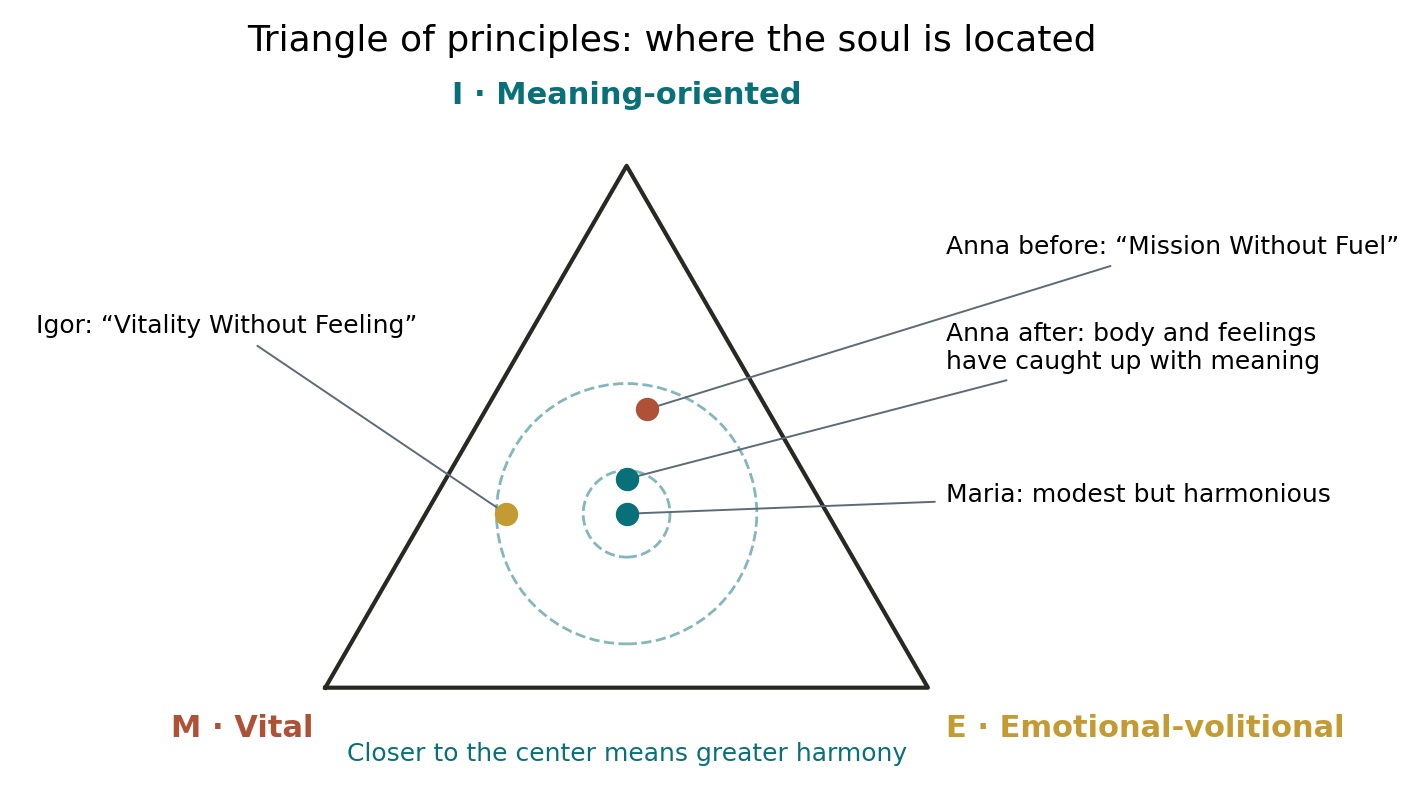
Fig. 2. The Triangle of Principles: Harmony Means Being Close to the Center
Harmonious Fullness
The index’s question: how much of my strength can I actually use?
What the result means. Resources trapped in a skewed soul function less effectively than the same resources distributed evenly. Maria has as much strength as Anna, but it is distributed evenly, allowing her soul to rely on all three principles. With the same reserves, Anna receives noticeably less: the difference is the cost of disharmony—the resources spent maintaining balance.
The index prevents a problem from being “hidden” behind a strength: strong meaning does not cover emptiness in the body, and large reserves do not compensate for severe imbalance.
|
|
A RULE FOR READING HARMONY Harmony cannot be interpreted without fullness. Harmony describes form; fullness describes strength. A uniformly weak soul is harmonious, but not healthy. |
Orientation
The index’s question: where is the soul directed—toward construction or destruction?
What the result means. Anna’s compass needle sits slightly below the midpoint. Constructive and destructive forces are almost equal and, in effect, are struggling with each other. This is not a “bad soul,” but a soul at a crossroads.
- The constructive has not faded: Anna still loves and cares for her patients. This is the main source of hope.
- The destructive is directed toward herself rather than others: harsh self-blame after a patient’s death and resentment toward the healthcare system. This pattern is typical of moral injury.
Two paths are possible. Without change, self-blame gradually turns into bitterness and cynicism. If constructive forces are supported, guilt can become compassion for patients and for herself. The aim is not the complete absence of “darkness”: anger at an unjust system can be healthy if it becomes boundary protection rather than self-punishment.
Agency
The index’s question: can the person notice, stop, and choose?
What the result means. Anna’s governing agency is functioning at less than half capacity. Yet identifying the weak link matters more than the total:
- Anna’s awareness is good: she is a physician trained to observe symptoms, including her own.
- Pause is the weakest link. There is almost no interval between impulse and action: in the evening, her hand automatically reaches for a glass and the news feed.
- Choice is more often driven by habit and a sense of duty than by values.
Anna resembles a driver who sees the turn clearly but whose brakes barely work. Understanding without a pause creates a particularly painful state: “I know everything about myself—and still do it.” This generates still more self-blame.
|
|
PSYCHOTHERAPIST’S COMMENTARY This is a valuable clinical clue: work with Anna should begin with practicing the pause, rather than analysis, which she already handles well. Intellectual clients often “know everything about themselves,” but lack precisely the interval between impulse and action. |
Soul Integrity (Ψ)—The Main Outcome
The index’s question: what is in the soul, where is it going, and who governs it—all together?
What the result means. Anna’s soul is in the strained zone. It holds together, but only with effort—like a bridge carrying its load mainly on one support. This is not yet a crisis, but it is no longer stability.
- What: there is enough strength to live and work, but it is skewed toward meaning.
- Where: the soul is at a crossroads between constructive engagement and self-blame.
- How: governance is weakest—there is no pause.
Orientation and agency, rather than meaning, determine the trajectory ahead. A strained soul may maintain outward well-being for years, but without change it gradually moves toward depletion. The plan therefore centers on pausing, sleep, and self-compassion rather than “finding new meaning,” which Anna already has.
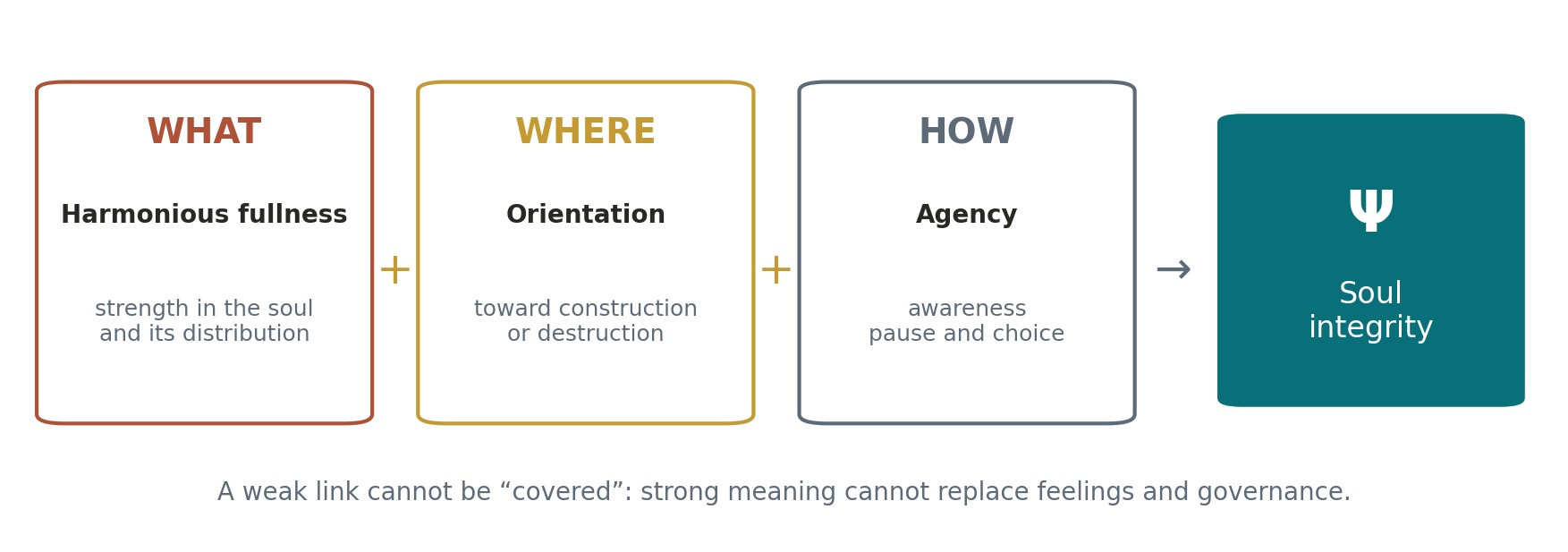
Fig. 3. Soul Integrity Emerges from Three Answers: What, Where, and How
Five zones are used to interpret the outcome: flourishing soul (harmony, constructive engagement, freedom of choice), stable (resources and areas for growth), strained (holding together through overexertion of one principle), depleted (systematic support is needed), and in crisis (professional help is indicated). Zone boundaries remain provisional and require testing in a sample.
|
|
THE WEAKEST-LINK PRINCIPLE Soul integrity is organized so that a strong principle cannot “cover” the absence of another. A strong mind cannot save a soul without feelings, and strong feelings cannot save it without governance. Strengthening the weakest link therefore produces the greatest gain. |
Holographic Harmony
The index’s question: are all three lenses aligned with one another?
What the result means. At first glance, Anna’s score is almost good. Yet it contains a trap, and it is important to see it.
- Harmony of the principles is the lowest of the three: the main imbalance lies here, between body, feelings, and meaning.
- Harmony of the soul’s life looks excellent, but this is harmony at a low level: “what,” “where,” and “how” are equally weakened. Uniform weakness is not the same as being well.
- Harmony of maturity shows that Anna’s soul retains its form better than it functions, and functions better than it grows. Arrested development is typical of burnout and unprocessed grief: Anna has no time to say goodbye to her patients who have died.
There is a positive side: high consistency across the lenses means the problem is localized. Rather than chaos at every level, there is a specific imbalance and a halt in growth. Knowing where it hurts tells us where to direct help.
Group 2. Risk to the Soul—An Analogue of “Sinfulness”
In the digital sins article, we assessed “sinfulness” as behavior’s deviation from a norm. In the soul model, the analogue of sin is the gap between what a person considers important and how they live. This is both a psychological translation of the ancient understanding of sin as “missing the mark” and a working description of moral injury.
Value–Action Gap
The index’s question: how far do actions fall short of values—in relation to self, others, and meaning?
What the result means. Anna’s soul lives with a noticeable crack between words and deeds. What matters most is where it lies:
- In relation to herself, the gap is largest. Anna sincerely considers self-care important, yet lives as though her body does not belong to her.
- In relation to others, the gap is smaller: Anna gives generously to patients and family, but after a patient’s death she feels she did not do everything she should have done.
- In relation to meaning, service and faith remain alive, but increasingly become obligations rather than sources of strength.
This is the paradox of the helping professions: a person generously gives others what she denies herself. Anna is tormented not because she is a bad person, but because she does not live as she herself believes is right. The good news is that gaps close through small actions aligned with a value, rather than grand decisions. Seven hours of sleep is also a form of care.
Soul Vulnerability
The index’s question: how exposed is the soul to injury right now?
What the result means. More than half of Anna’s “protective gates” are open. This is not a diagnosis, but a measure of how easily another blow—another patient’s death, a conflict, a sleepless week—could deepen the injury.
- The leading marker is shame and guilt. This is the core of vulnerability and matches the pattern of moral injury.
- Loneliness, being stuck, and helplessness reinforce each other: loneliness impedes the processing of guilt, while helplessness sustains being stuck.
- Meaning begins to weaken, while wine and the news feed function as anesthesia rather than rest.
The markers are expressed almost evenly: Anna’s vulnerability is systemic rather than tied to one symptom. No single technique can close it—protection is needed from several directions at once: working with guilt, restoring connections, and regaining a sense of influence over her life.
Integrated Risk
The index’s question: is the combination of gap and vulnerability dangerous?
What the result means. Anna’s risk is elevated. This is neither a verdict nor a scale of life-threatening danger, but an answer to how hazardous the meeting of two problems is:
- A gap without vulnerability—the person does not entirely live by their values, but is surrounded by love. Usually, they cope.
- Vulnerability without a gap—the person is fragile, but lives in harmony with themselves. They have something to rely on.
- Gap plus vulnerability—as with Anna: a crack between words and deeds beside open gates. This is where the soul is most easily injured.
Anna’s vulnerability is more pronounced than her gap. The quickest way to reduce risk is therefore protection first, rather than moral work on “living correctly.” There is another point: physicians tend to say, “I will cope on my own.” The index provides a calm, non-shaming basis for seeking help.
|
|
IMPORTANT The soul risk index does not assess the risk of self-harm. If a person reports thoughts of harming themselves, immediate professional assessment is required, regardless of any indicators. |
Group 3. Navigation
Cell Priority
The index’s question: which of the 27 cells should we start with?
What the result means. Priority is not the “worst” cell, but the best entry point. Three things are considered: how deep the deficit is, how much the cell “poisons” the others, and how much its improvement will lift them.
- Sleep and recovery is the first critical cell. Fatigue weighs on everything: it lowers mood, disrupts pause, and encourages evening wine. It is also a strong lever: improve sleep, and energy and self-control follow. Work should therefore begin with the body, rather than trauma analysis.
- Self-blame is the second critical cell. Guilt feeds loneliness, helplessness, and being stuck; turning it into self-compassion is the second key step.
- A coherent life story is a resource. Here, low priority means not “unimportant,” but “does not need fixing.” This cell supports change: “I care for myself so I can continue caring for others.”
The priority rule identifies one to three cells out of 27—exactly as many as a person can realistically keep in focus.
Development Index
The index’s question: does the soul’s integrity grow from one assessment to the next?
What the result means. The index turns the model from a “snapshot” into a “film.” It compares a person with themselves, rather than with others: the same gain means different things for someone starting in crisis and someone starting from stability.
- Growth—the selected cells and practices are working.
- Stagnation—revise the plan or check whether it is being followed.
- A setback—return to the priority map, check vulnerability, and increase support if necessary.
The sources of growth matter just as much. One follow-up assessment does not yet establish a lasting result: to confirm that changes persist, at least one more assessment is needed after one to three months.
Governed Polarity (Experimental)
The index’s question: is the soul’s “darkness” governed?
What the result means. This is a hypothesis inspired by Seklitova and Jung: a healthy soul is not one without “darkness,” but one in which “darkness” is governed—anger becomes boundary protection, fear becomes caution. The index raises important questions: if Anna’s anger toward the system almost disappeared after therapy, did she integrate it—or simply suppress it again?
6. Seven Forms of the Soul
The harmony index says how skewed the soul is, but helping also requires knowing the direction. Two people with the same harmony may need opposite steps: one needs to awaken feelings, the other to restore meaning. We therefore distinguish seven types based on the triangle of principles: one harmonious type and two imbalances for each principle—excess, when one pulls the soul toward itself, and deficit, when one lags behind the other two.
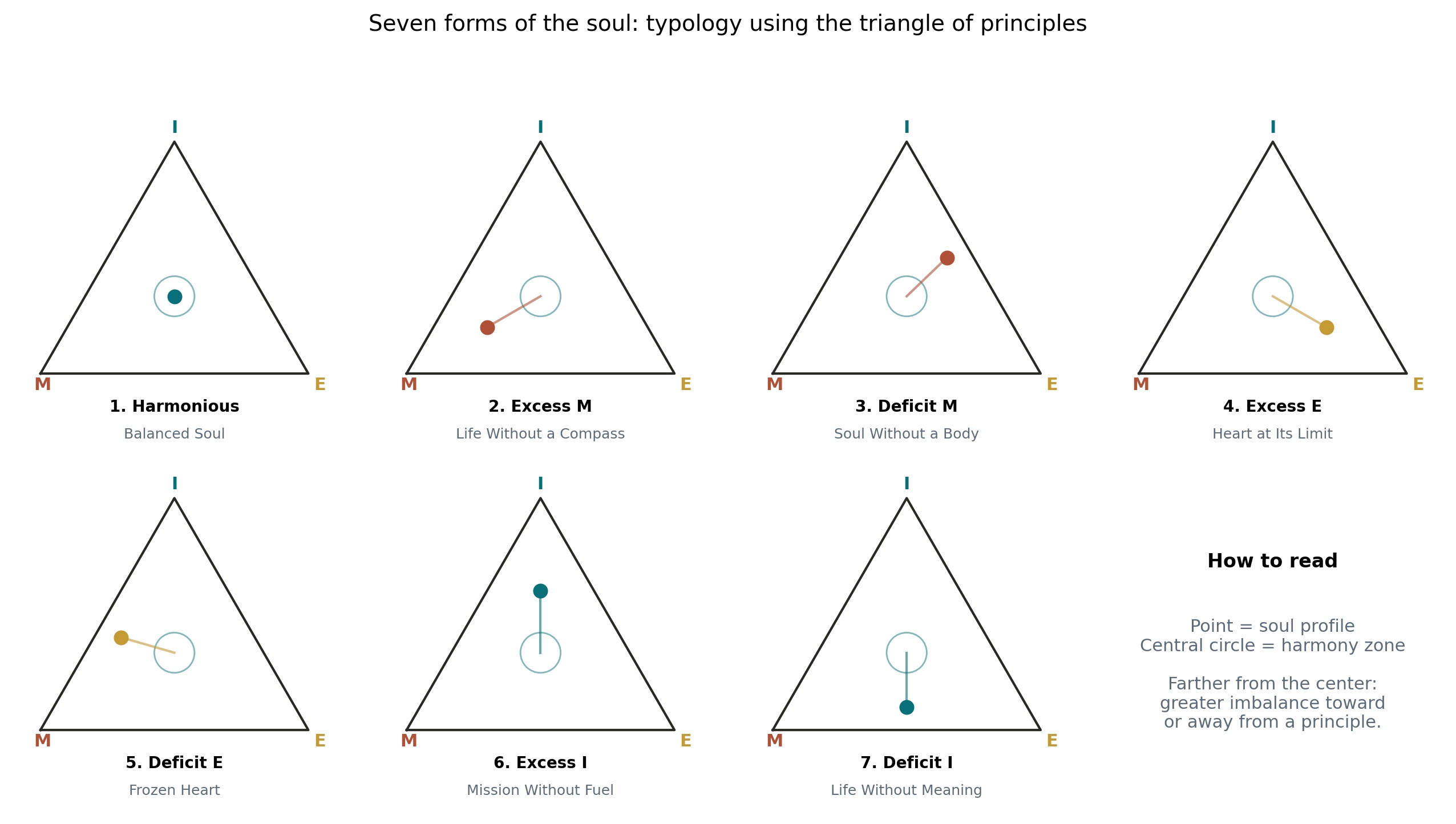
Fig. 5. Seven Forms of the Soul: Each Type’s Profile in the Triangle of Principles
|
Type |
How It Sounds in a Consultation |
Brief Portrait and First Task |
|---|---|---|
|
1. Balanced Soul |
“Things vary, but I cope” |
Body, feelings, and meaning support each other. The task is to sustain growth; when strength is low, gently replenish all three principles. |
|
2. Life Without a Compass (excess body) |
“I want it, so I do it—and regret it later” |
Abundant energy and desires, little direction; risk of impulsivity and addictive loops. The task is to pause and ask, “What for?” |
|
3. Soul Without a Body (body deficit) |
“I would love to, but physically I have no strength” |
Feelings and meaning are alive, but the body cannot keep up. The task is to restore sleep, movement, and nutrition, and check physical health. |
|
4. Heart at Its Limit (excess feelings) |
“Everything affects me; I am on a swing” |
Feelings rock the entire soul: resentment, anxiety, codependency. The task is to give feelings a channel—regulation and grounding in body and values. |
|
5. Frozen Heart (feelings deficit) |
“I understand everything, but I feel nothing” |
Feelings are switched off as protection against pain. The task is to gently restore sensitivity at the pace of safety. |
|
6. Mission Without Fuel (excess meaning) |
“I must; it matters” |
For years, meaning pays for life at the expense of body and feelings—the burnout profile of helping professionals. The task is to bring body and feelings up to its level without reducing meaning. |
|
7. Life Without Meaning (meaning deficit) |
“I have everything, but I do not know what it is for” |
Frankl’s existential vacuum; scrolling, shopping, and overeating fill the emptiness. The task is values, one’s own story, and service. |
|
|
ANNA Meaning “stands out” most strongly in Anna, while her body lags furthest behind: type 6, “Mission Without Fuel,” with a shade of bodily deficit. After 12 weeks, her profile became harmonious: a type is the soul’s present form, rather than a lifelong label. |
|
|
PSYCHOTHERAPIST’S COMMENTARY Typology saves time in the first sessions. The same complaint—“I feel troubled in my soul”—requires opposite steps for “Frozen Heart” and “Heart at Its Limit”: in one, gently permitting feelings; in the other, teaching their regulation. Help in the wrong direction can increase the imbalance. |
7. Three Views of the Soul: From Within, From Outside, and Through Behavior
Everything discussed so far relies on self-report—what a person says about their own soul. This is an invaluable source, but it has “blind spots”: mood, the wish to appear better, the habit of overlooking what hurts. Years of research show that different observers agree only moderately when assessing the same person. This is information, rather than error: each sees a different side of the truth. [29] [30]
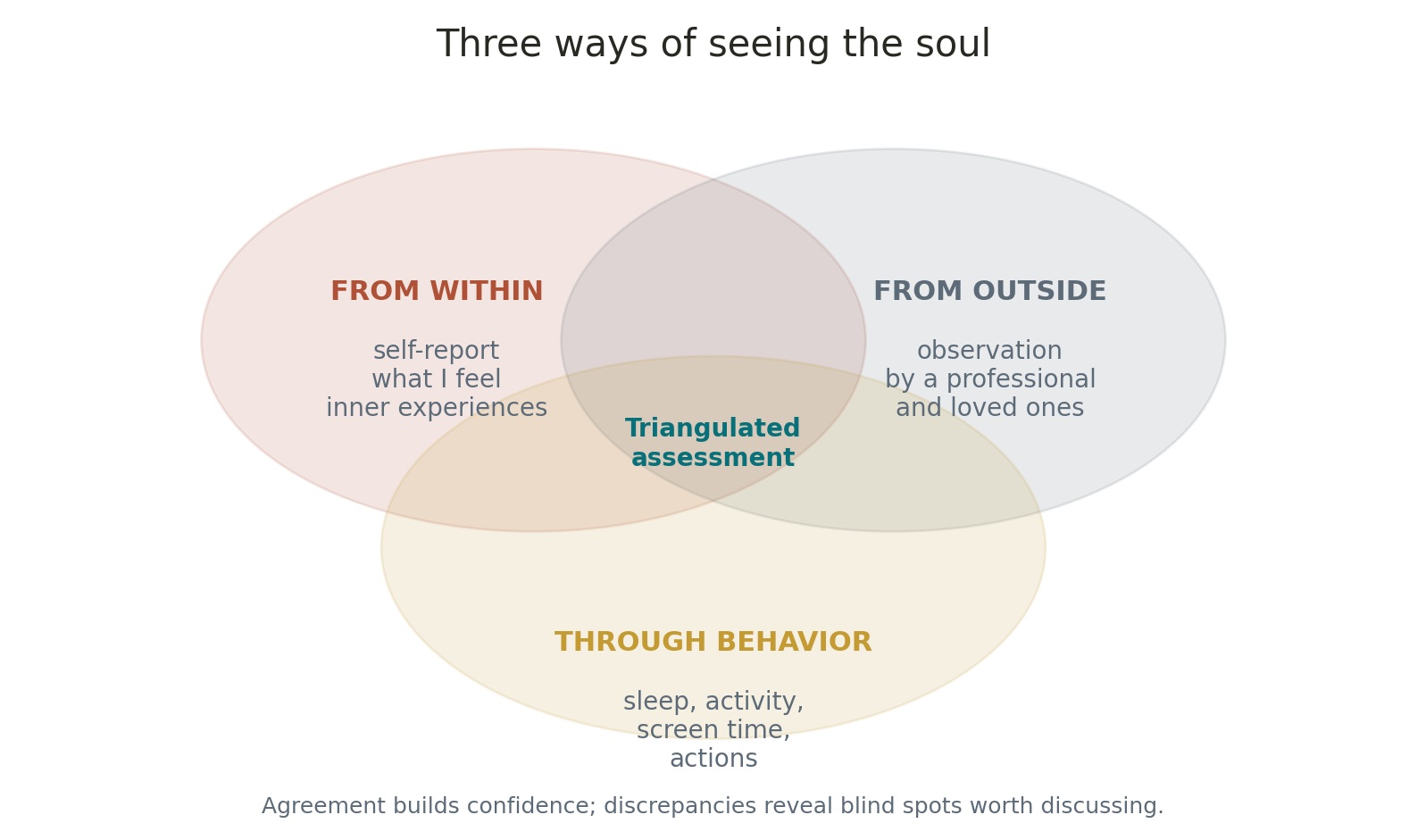
Fig. 6. Three Ways of Seeing the Soul and Their Intersection
|
View |
What It Sees Best |
What It Does Not See |
|---|---|---|
|
From within—self-report |
experiences, meanings, values, inner choice |
one’s own blind spots |
|
From outside—a professional and loved ones |
emotional tone, relational behavior, contradictions in the narrative |
life outside the consulting room or a single role |
|
Through behavior—sleep, activity, screen time, calendar |
actual habits and actions |
meaning and inner experiences |
The third view draws on digital phenotyping—studying behavior through smartphone and wearable data. For the soul model, it is especially useful in two areas: it reveals how much time actually goes to what the person considers important, and how often a hand reaches for the phone without a decision—in other words, how strong the pause is. [31]
|
|
ANNA’S BLIND SPOT The three views agreed on body, feelings, and pause: Anna truly was depleted, emotionally muted, and living without a pause. Yet in one area they diverged. Anna was certain she lived by her values—serving patients filled her days. The calendar showed something else: 62 working hours per week, one evening with family, and not a single hour for herself. The strength of one value obscured the gaps in the others. This discrepancy became a topic for conversation rather than a reproach: “What do you feel when you look at this?” (The data are illustrative.) |
|
|
THE ETHICS OF BEHAVIORAL DATA Such data are collected only with the person’s consent, remain with them, and serve shared understanding rather than surveillance. |
8. Three Levels of Help: Restore, Balance, Elevate
The priority map suggests where to begin. Yet every point also requires an answer to what kind of help is needed. In the soul model, help is also triadic and follows the logic of maturity:
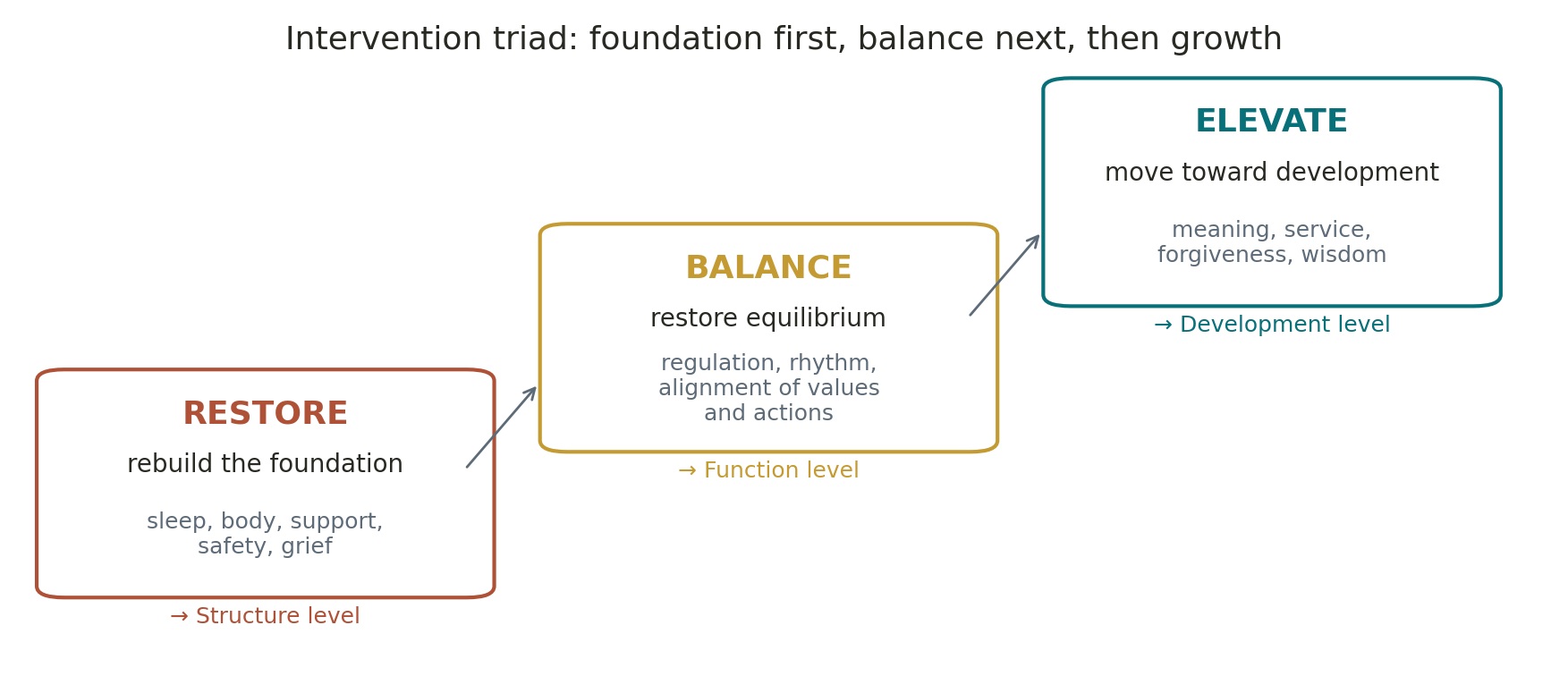
Fig. 7. Three Levels of Help and Their Relationship to the Soul’s Maturity Levels
- Restore—rebuild the foundation: sleep, bodily care, safety, relational support, and at least one small meaningful act each day.
- Balance—restore equilibrium: emotional regulation, a rhythm of exertion and rest, alignment of values and actions, and pause.
- Elevate—move to the level of development: connect changes with meaning, transform suffering into wisdom, and move toward forgiveness, gratitude, and service.
Clinicians know this sequence: Judith Herman described recovery after trauma as a path from safety through mourning to rejoining life, emphasizing that safety begins with the body—sleep, food, movement. Related triads appear in other articles in the series: “replenish–retain–direct” for charge, and “reduce–safeguard–endure” for uncertainty. [32]
|
|
THE RULE OF SEQUENCE Restore first, then balance, then elevate. A discussion of meaning with someone sleeping five hours a night sounds like yet another “must.” Yet getting stuck at restoration is also unhelpful: without balance and growth, improvements do not last. If a person has thoughts of self-harm, “restore” primarily means safety and professional help. |
9. Anna’s Plan: From Assessment to Change
Let us bring everything we have read into one picture. Anna’s profile is type 6, “Mission Without Fuel”: strong meaning, depleted body and feelings, orientation at a crossroads, and pause as the weak link in governance. Soul integrity is in the strained zone, and risk is elevated. The hologram shows exactly where deficits lie, where support exists, and where to begin.
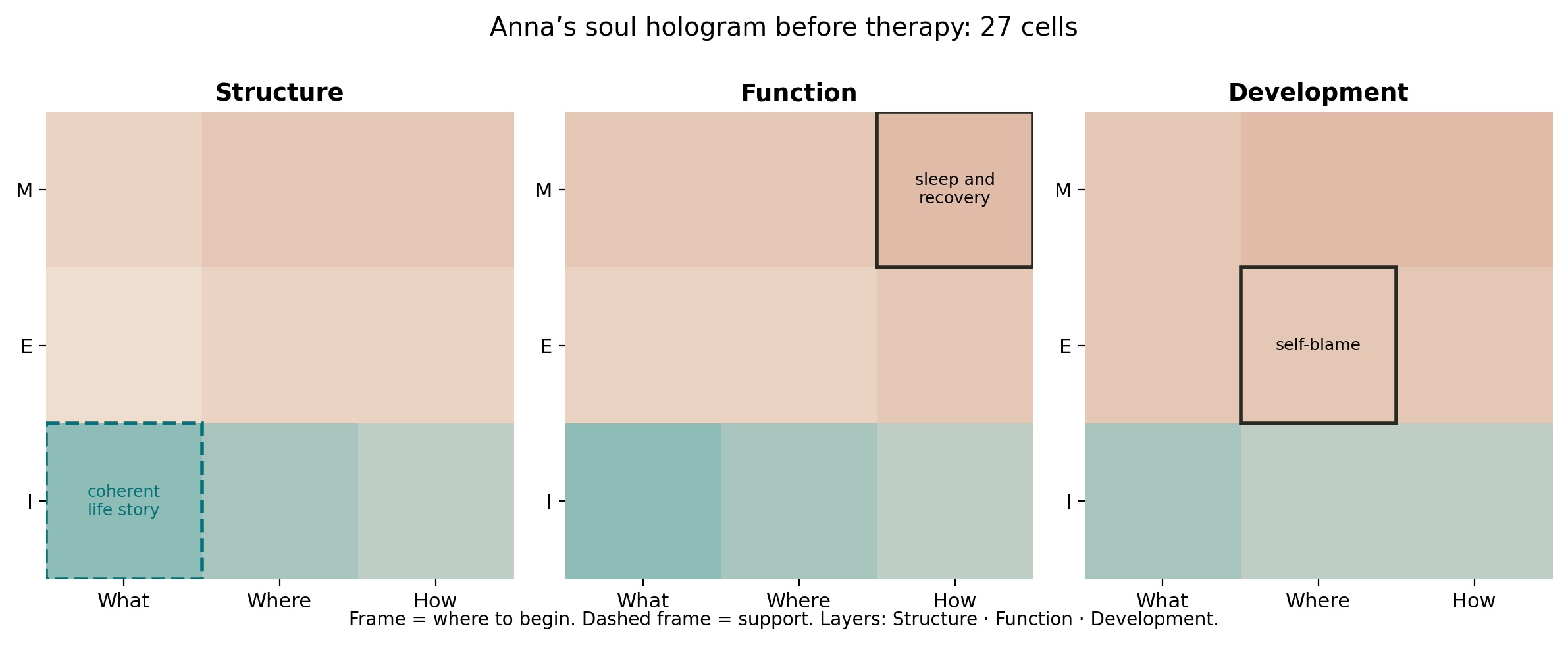
Fig. 8. Anna’s Soul Hologram: Deficits, Supports, and Where to Begin
A 12-Week Plan Across Three Levels of Help
For each of the three areas of work, the plan followed the rule of sequence: restore first, then balance, then elevate. Anna’s strong sense of meaning provided support: “I care for myself so I can continue caring for others.”
|
Area of Work |
Restore (weeks 1–4) |
Balance (weeks 5–8) |
Elevate (weeks 9–12) |
|---|---|---|---|
|
Sleep and recovery |
seven hours of sleep on five nights out of seven; wine only on weekends |
a “recovery window” after shifts; an agreed schedule |
swimming for joy; bodily care as part of service |
|
Self-blame |
a letter to oneself as to a close friend |
distinguish responsibility from omnipotence |
a farewell ritual for patients who have died; a Balint group |
|
Pause |
“stop–breathe–choose” three times a day |
no work messages after 9 p.m. |
the right to say “no” without guilt |
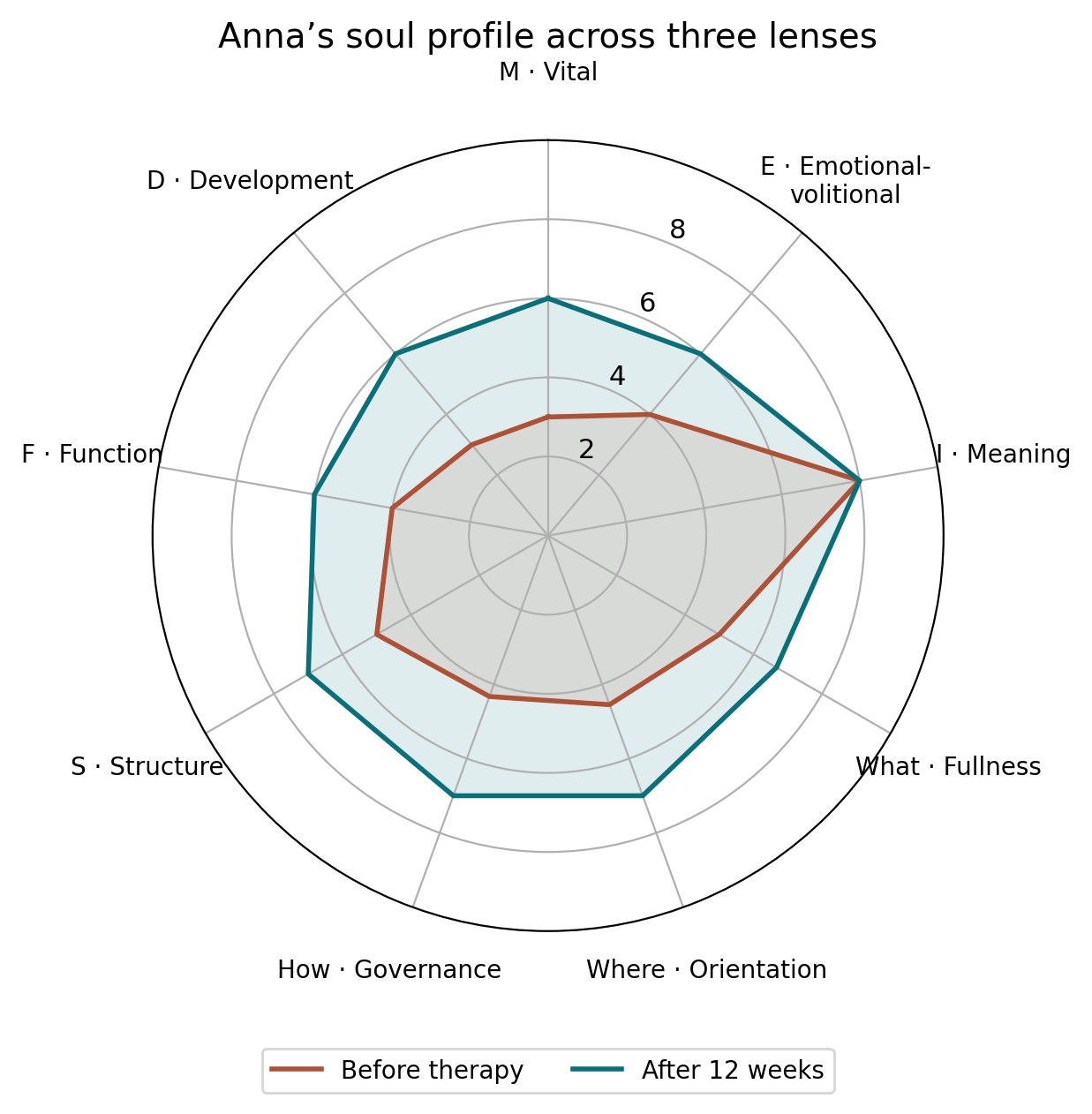
Fig. 9. Anna’s Soul Profile Before the Work and After 12 Weeks
|
|
THE CASE’S MAIN LESSON After 12 weeks, Anna’s profile type changed from “Mission Without Fuel” to harmonious, her soul moved from the strained zone into the stable zone, and risk fell to low. Pause grew twice as strong, self-blame gave way to self-compassion, and the value–action gap halved. Yet the most important point is that the meaning-oriented principle did not change. Growth came not from “adding meaning,” but from body and feelings catching up with meaning already present. This is harmonization: we do not remake the person, but restore balance to what is already there. And the model suggested where to begin—with sleep and practicing the pause, rather than analysis, which Anna already handled well. |
10. The Soul Article as an Umbrella for the Entire Series
Looking back at the preceding articles in the series, we can see that each described one area of the overall soul model in detail. The “Ψ-Soul” model joins them into a whole.
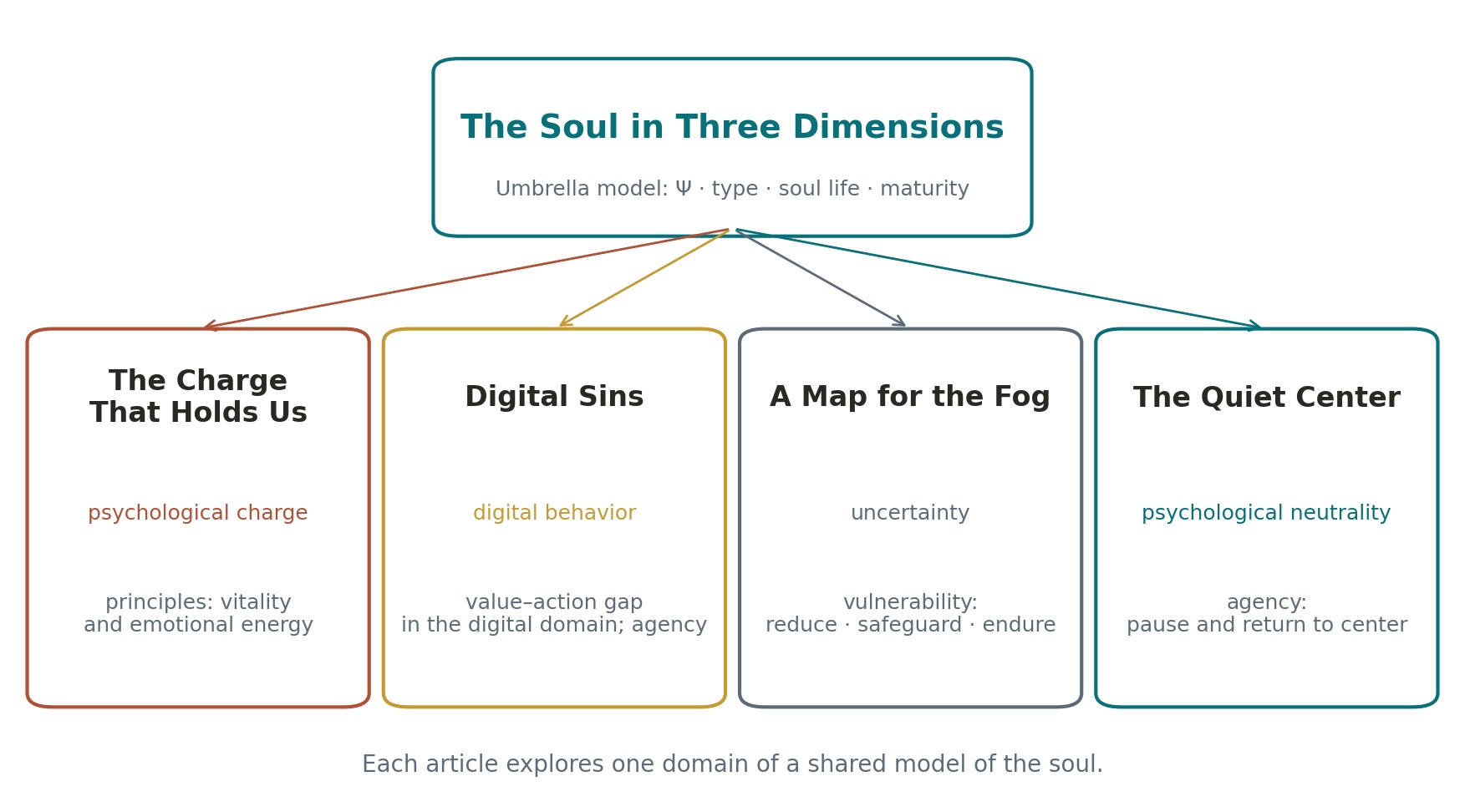
Fig. 10. Each Article’s Place in the Shared Soul Model
|
Article in the Series |
Place in the Soul Model |
|---|---|
|
“The Charge That Holds Us” |
describes the soul’s energetic principle—how much strength body and feelings provide, and where it is directed |
|
The digital sins article |
a specific value–action gap: I want to spend attention on one thing, but it goes elsewhere |
|
“A Map for the Fog” |
a way of addressing vulnerability: the unknown is a major source of the soul’s exposure to injury |
|
“The Quiet Center” |
a resource for governance: the capacity to notice, stop, and return to one’s center |
All the articles speak the same language: three lenses, a 27-cell hologram, harmony, the weakest-link rule, and a triad of help. Their conclusions can therefore be read together—and used to build a route:
- little strength, depleted body and feelings → the psychological charge article and test;
- a large screen-related gap between values and life → the digital sins checklist;
- high vulnerability amid extensive uncertainty → “A Map for the Fog”;
- weak pause and choice → “The Quiet Center.”
11. Testing Across 22 Countries: The Global Flourishing Study
A model emerging from Western and Russian psychological traditions must be tested across cultures. Suitable data already exist for a first step. The Global Flourishing Study is a five-year study of more than 200,000 people in 22 countries across six continents, conducted by Harvard, Baylor University, Gallup, and the Center for Open Science. It measures six domains of flourishing: happiness, health, meaning, character, close relationships, and financial stability. [33] [34]
What Is Already Known
- Wealth does not equal meaning. The wealthier a country, the weaker the average sense of meaning and purpose; residents of middle-income countries rate meaning and close relationships more highly. [35] [36]
- Young people have a harder time. In many countries, flourishing ratings are lowest among those aged 18–24. [37]
- Spiritual practice is associated with higher flourishing almost everywhere. [38]
|
|
WHAT THIS MEANS FOR THE MODEL The finding that “wealth does not equal meaning” is almost a portrait of “Life Without Meaning.” The model predicts that this type is more common in wealthy countries, while profiles with strong meaning and relationships are more common in middle-income countries. |
How to Test the Model
The study’s questions are close to many parts of the model: health to the body; happiness, relationships, and belonging to feelings; meaning and purpose to the meaning-oriented principle; character to orientation; and anxiety and depression symptoms to vulnerability. They can be used to construct an approximate soul profile and test five ideas: [39] [40]
- harmony among the principles predicts flourishing more strongly than the quantity of strength alone;
- the three principles—body, feelings, meaning—can be identified across cultures;
- “Life Without Meaning” is more common in wealthy countries;
- young people have lower harmony and more frequent meaning deficits;
- spiritual practice is associated with flourishing primarily through meaning and orientation.
|
|
A CANDID LIMITATION An approximate profile is not the actual one. Most study indicators are measured with a single question, while governance and the value–action gap are barely represented. This is a first step that will show whether the model’s questionnaire should be translated into other languages. |
Self-Assessment Checklist
As an easy first step, the article is accompanied by a web checklist modeled on the digital sins article’s checklist—free, private, lasting about five minutes, and requiring no registration. It includes 27 short questions—one per hologram cell—with responses ranging from “never” to “always.” Answers never leave the browser. [41]
The result shows the person their type among the seven, a triangle of principles, a 27-cell map of deficits and supports, and a 14-day plan: three entry points, each with a “restore,” “balance,” and “elevate” step. The checklist does not replace a full assessment, but helps a person see the soul as a whole within minutes and decide whether deeper work is needed.
12. Model Boundaries and Ethics
- The indices are working hypotheses. Zone thresholds are provisional and have not yet been tested in a sample; self-ratings depend on mood and the capacity for reflection.
- The model does not diagnose or replace clinical assessment, particularly where self-harm risk is present.
- The model does not measure the “worth” of a soul and must not be used by employers, insurers, or communities to evaluate people.
- Esoteric sources (such as Seklitova and Strelnikova’s book) serve only as metaphors and sources of hypotheses.
- Culture matters: ideas of constructive engagement and the balance of principles differ across traditions—testing with data from different countries is therefore needed.
- Types and “blind spots” are working tools: type thresholds and the conversion of behavioral data into ratings have not yet been tested in a sample.
Three Objections and Responses
|
Objection |
Response |
|---|---|
|
“You cannot turn the soul into numbers” |
We are not doing that. Indices are a mirror, rather than a verdict: they help people see what they already feel but cannot name. |
|
“Why use ‘soul’ when we already have ‘personality’?” |
Personality describes what a person is like. The soul describes what they live for and where their life is directed. Without meaning and orientation, the picture is incomplete. |
|
“This is religion, not science” |
The model describes the soul’s manifestations rather than its nature and rests on testable constructs: meaning, sense of coherence, and moral injury. |
|
|
A ONE-MINUTE PAUSE Pause for a minute and ask yourself, without calculating anything: What fills my soul right now—body, feelings, or meanings? What is missing? Where is it directed this week—more toward constructive engagement or resentment? How do I govern it—do I notice, stop, and choose? One small action for today—in the weakest of these three areas. |

Conclusion
The soul is one of the oldest and most enduring concepts in human experience. Science turned away from it for a long time, but is returning today through research on meaning and purpose, moral injury, sense of coherence, life stories, and the neuroscience of the self—and through the questions artificial intelligence raises for us.
Triadic Intelligence offers a way to work with the soul without simplification or mystification. Three principles, three questions of life, and three maturity levels combine into a 27-cell hologram and a small set of indices answering simple human questions: do I have enough strength, am I balanced, where am I going, who governs my life, and where should I begin?
The model becomes practical through three further triads. We view the soul from within, from outside, and through behavior, to see more than what a person thinks about themselves. We recognize its form—one of seven types. And we help in the proper sequence: restore, balance, elevate.
The soul article unites the series—charge, uncertainty, digital sins, and neutrality—within one model. Its next steps are testing in a sample alongside established questionnaires, testing across 22 countries using Global Flourishing Study data, and a web tool with a checklist that will make it accessible to everyone.
“Plato called it justice within the soul. We can call it harmony—and, for the first time, learn to see it.”
References
Foundation of the Method and the Author’s Materials
- Zolotov A. Triadic Intelligence: Designing Reality With the Lens Triad. https://www.amazon.com/Triadic-Intelligence-Designing-Systems-Based-Transformation/dp/B0FPX9B59G
- Alex Zolotov. The Sins That Come Looking for Us https://alexz.us/resources/digital-sins
- Alex Zolotov. Digital Sins — Interactive Self-Check. https://alexz.us/resources/digital_sins_check-list
- Alex Zolotov. The Charge That Holds Us. https://alexz.us/resources/the-charge-that-holds-us
- Alex Zolotov. Psychological Charge Check. https://alexz.us/resources/charge-check
- Alex Zolotov. A Map for the Fog. https://alexz.us/resources/a-map-for-the-fog
Scientific and Academic Sources
- Shadrikov, V. D. The Return of the Soul: Theoretical Foundations and Methodology of Psychological Science. Moscow: Institute of Psychology, Russian Academy of Sciences, 2021. https://psy.su/feed/12963/
- Anokhin, K. V., and Chernigovskaya, T. V. The Brain and Its “Self”: Who Are We? Where Do We Come From? Where Are We Going? Moscow: AST, 2026. https://ast.ru/book/mozg-i-ego-ya-kto-my-otkuda-my-kuda-my-idem-894003/
- Rickabaugh B., Moreland J.P. The Substance of Consciousness. — Wiley-Blackwell, 2023. https://blog.apaonline.org/2023/12/29/recently-published-book-spotlight-the-substance-of-consciousness/
- Egnor M., O’Leary D. The Immortal Mind. — Worthy, 2025. https://www.hachettebookgroup.com/titles/michael-egnor/the-immortal-mind/9781546006350/
- Plato’s Ethics: An Overview. Stanford Encyclopedia of Philosophy. https://plato.stanford.edu/entries/plato-ethics/
- Damasio A. Self Comes to Mind: Constructing the Conscious Brain. — Pantheon, 2010. https://www.nature.com/articles/palcomms201515
- McAdams D.P., Pals J.L. A New Big Five // American Psychologist, 2006. https://eric.ed.gov/?id=EJ735192
- McAdams D.P., McLean K.C. Narrative Identity // Current Directions in Psychological Science, 2013. https://prod-edxapp.edx-cdn.org/assets/courseware/v1/b359406bfd0a296f41392387a0807ef9/asset-v1:SmithX+PSY374x+1T2017+type@asset+block/Wk2__Narrative_Identity__McAdams___McLean__2013__.pdf
- Eriksson M., Lindström B. Sense of Coherence Scale and the relation with health // JECH, 2006. https://oamonitor.ireland.openaire.eu/national/search/publication?pid=10.1136/jech.2005.041616
- Eriksson M., Lindström B. Sense of coherence scale and quality of life // JECH, 2007. https://pmc.ncbi.nlm.nih.gov/articles/PMC2465600/
- Cohen R., Bavishi C., Rozanski A. Purpose in Life and All-Cause Mortality // Psychosomatic Medicine, 2016. https://pubmed.ncbi.nlm.nih.gov/26630073/
- Purpose in life and mortality: 488,765 participants // Psychological Medicine, 2026. https://pmc.ncbi.nlm.nih.gov/articles/PMC13370182/
- Meaning in life and mortality in UK Biobank. https://pmc.ncbi.nlm.nih.gov/articles/PMC11986375/
- VanderWeele T.J. et al. The Global Flourishing Study // Nature Mental Health, 2025. https://pmc.ncbi.nlm.nih.gov/articles/PMC12165845/
- Litz B.T. et al. Moral Injury: An Overview // Annual Review of Clinical Psychology. https://sites.bu.edu/litzlab/files/2025/06/annurev-clinpsy-081423-022604.pdf
- Moral Injury. St Andrews Encyclopaedia of Theology. https://www.saet.ac.uk/Christianity/MoralInjury
- Captari L.E. et al. Integrating clients’ religion and spirituality within psychotherapy // J Clin Psychol, 2018. https://onlinelibrary.wiley.com/doi/abs/10.1002/jclp.22681
- Parnia S. et al. AWAreness during REsuscitation – II // Resuscitation, 2023. https://pubmed.ncbi.nlm.nih.gov/37423492/
- Butlin P., Long R. et al. Consciousness in Artificial Intelligence, 2023. https://arxiv.org/abs/2308.08708
- WHO. Over a billion people living with mental health conditions, 2025. https://www.who.int/news/item/02-09-2025-over-a-billion-people-living-with-mental-health-conditions-services-require-urgent-scale-up
- Pew Research Center. Spirituality Among Americans, 2023. https://www.pewresearch.org/religion/2023/12/07/spirituality-among-americans/
- VanderWeele T.J. Insights From the Global Flourishing Study. Human Flourishing Program at Harvard. https://hfh.fas.harvard.edu/post/insights-from-the-global-flourishing-study
- Promoting human flourishing // Nature Human Behaviour, 2025. https://www.nature.com/articles/s41562-025-02213-6
- Variations in belonging across 22 countries in the Global Flourishing Study // Journal of Positive Psychology. https://www.tandfonline.com/doi/full/10.1080/17439760.2025.2569083
- Demographic variation in symptoms of depression and anxiety across 22 GFS countries // Communications Medicine. https://www.nature.com/articles/s43856-025-01366-9
- De Los Reyes A. et al. The Validity of the Multi-Informant Approach // Psychological Bulletin, 2015. https://pmc.ncbi.nlm.nih.gov/articles/PMC4486608/
- Insel T.R. Digital Phenotyping: Technology for a New Science of Behavior // JAMA, 2017. https://doi.org/10.1001/jama.2017.11295
- Herman J.L. Recovery from psychological trauma // Psychiatry and Clinical Neurosciences, 1998. https://onlinelibrary.wiley.com/doi/full/10.1046/j.1440-1819.1998.0520s5S145.x
- Zolotov A. Digital Sins — Interactive Self-Check. https://alexz.us/resources/digital_sins_check-list
- U.S. Surgeon General. Our Epidemic of Loneliness and Isolation, 2023. https://www.govinfo.gov/app/details/GOVPUB-HE20-PURL-gpo212387
- Seklitova, L. A., and Strelnikova, L. L. The Soul and the Secrets of Its Structure. Moscow: Amrita-Rus, 2003 (esoteric source; used as a metaphor).
Recommended Reading
Frankl, V. Man’s Search for Meaning; The Will to Meaning. · Jung, C. G. Modern Man in Search of a Soul. · Hillman, J. Re-Visioning Psychology. 1975. · Moore, T. Care of the Soul. 1992. · Antonovsky, A. Unraveling the Mystery of Health. 1987. · Leontiev, D. A. The Psychology of Meaning. · Vasilyuk, F. E. The Psychology of Experiencing. · Hayes, S. C., et al. Acceptance and Commitment Therapy. 2nd ed., 2012.
-
Zolotov A. Triadic Intelligence: Designing Reality With the Lens Triad. Amazon. https://www.amazon.com/Triadic-Intelligence-Designing-Systems-Based-Transformation/dp/B0FPX9B59G ↑
-
Plato’s Ethics: An Overview. Stanford Encyclopedia of Philosophy. https://plato.stanford.edu/entries/plato-ethics/ ↑
-
Ancient Ethical Theory. Stanford Encyclopedia of Philosophy. https://plato.stanford.edu/archives/fall2007/entries/ethics-ancient/ ↑
-
The embodied mind: when biology meets culture and society. Humanities and Social Sciences Communications. https://www.nature.com/articles/palcomms201515 ↑
-
McAdams D.P., Pals J.L. A New Big Five (2006). ERIC. https://eric.ed.gov/?id=EJ735192 ↑
-
The Sense of Coherence: The Concept and Its Relationship to Health. Springer. https://link.springer.com/content/pdf/10.1007/978-3-030-79515-3_9.pdf ↑
-
Moral Injury. St Andrews Encyclopaedia of Theology. https://www.saet.ac.uk/Christianity/MoralInjury ↑
-
Litz B.T. et al. Moral Injury: An Overview of Conceptual, Definitional, Assessment, and Treatment Issues. Annual Review of Clinical Psychology. https://sites.bu.edu/litzlab/files/2025/06/annurev-clinpsy-081423-022604.pdf ↑
-
WHO. Over a billion people living with mental health conditions (2 September 2025). https://www.who.int/news/item/02-09-2025-over-a-billion-people-living-with-mental-health-conditions-services-require-urgent-scale-up ↑
-
U.S. Surgeon General’s Advisory on Social Connection and Community: Toolkit (2023). https://aohp.org/aohp/Portals/0/Documents/Conf2023/Surgeon%20General%E2%80%99s%20Advisory%20on%20Social%20Connection%20and%20Community%20Toolkit%20for%20USG%20and%20Partners.pdf ↑
-
Pew Research Center. Spirituality Among Americans (2023). https://www.pewresearch.org/religion/2023/12/07/spirituality-among-americans/ ↑
-
Cohen R., Bavishi C., Rozanski A. Purpose in Life and Its Relationship to All-Cause Mortality and Cardiovascular Events. Psychosomatic Medicine, 2016. https://pubmed.ncbi.nlm.nih.gov/26630073/ ↑
-
Purpose in life and mortality: a meta-analysis of 488,765 participants. Psychological Medicine, 2026. https://pmc.ncbi.nlm.nih.gov/articles/PMC13370182/ ↑
-
Meaning in life and all-cause and cause-specific mortality (UK Biobank). https://pmc.ncbi.nlm.nih.gov/articles/PMC11986375/ ↑
-
The Global Flourishing Study: Study Profile and Initial Results. Nature Mental Health, 2025. https://pmc.ncbi.nlm.nih.gov/articles/PMC12165845/ ↑
-
Butlin P., Long R. et al. Consciousness in Artificial Intelligence: Insights from the Science of Consciousness (2023). arXiv. https://arxiv.org/abs/2308.08708 ↑
-
Captari L.E. et al. Integrating clients’ religion and spirituality within psychotherapy: A comprehensive meta-analysis. Journal of Clinical Psychology, 2018. https://onlinelibrary.wiley.com/doi/abs/10.1002/jclp.22681 ↑
-
Psychological Gazette: on V. D. Shadrikov’s book The Return of the Soul. https://psy.su/feed/12963/ ↑
-
Anokhin, K. V., and Chernigovskaya, T. V. The Brain and Its “Self”. AST Publishing, 2026. https://ast.ru/book/mozg-i-ego-ya-kto-my-otkuda-my-kuda-my-idem-894003/ ↑
-
Rickabaugh B., Moreland J.P. The Substance of Consciousness (Wiley-Blackwell, 2023). APA Blog. https://blog.apaonline.org/2023/12/29/recently-published-book-spotlight-the-substance-of-consciousness/ ↑
-
Egnor M., O’Leary D. The Immortal Mind (2025). Hachette Book Group. https://www.hachettebookgroup.com/titles/michael-egnor/the-immortal-mind/9781546006350/ ↑
-
The embodied mind: when biology meets culture and society. Humanities and Social Sciences Communications. https://www.nature.com/articles/palcomms201515 ↑
-
Parnia S. et al. AWAreness during REsuscitation – II. Resuscitation, 2023. PubMed. https://pubmed.ncbi.nlm.nih.gov/37423492/ ↑
-
Medical Xpress: New evidence indicates patients recall death experiences after cardiac arrest (2023). https://medicalxpress.com/news/2023-09-evidence-patients-recall-death-cardiac.pdf ↑
-
Eriksson M., Lindström B. Antonovsky’s Sense of Coherence Scale and the relation with health. J Epidemiol Community Health, 2006. https://oamonitor.ireland.openaire.eu/national/search/publication?pid=10.1136/jech.2005.041616 ↑
-
Eriksson M., Lindström B. Antonovsky’s sense of coherence scale and its relation with quality of life. J Epidemiol Community Health, 2007. https://pmc.ncbi.nlm.nih.gov/articles/PMC2465600/ ↑
-
McAdams D.P., McLean K.C. Narrative Identity (2013). https://prod-edxapp.edx-cdn.org/assets/courseware/v1/b359406bfd0a296f41392387a0807ef9/asset-v1:SmithX+PSY374x+1T2017+type@asset+block/Wk2__Narrative_Identity__McAdams___McLean__2013__.pdf ↑
-
Litz B.T. et al. Moral Injury: An Overview of Conceptual, Definitional, Assessment, and Treatment Issues. Annual Review of Clinical Psychology. https://sites.bu.edu/litzlab/files/2025/06/annurev-clinpsy-081423-022604.pdf ↑
-
De Los Reyes A. et al. The Validity of the Multi-Informant Approach to Assessing Child and Adolescent Mental Health. Psychological Bulletin, 2015. https://pmc.ncbi.nlm.nih.gov/articles/PMC4486608/ ↑
-
Agreement of informants on emotional and behavioral problems (review of meta-analyses Achenbach et al., 1987, 2005). Erasmus University Rotterdam. https://repub.eur.nl/pub/120273/120273_Chapter_3-Agreement_of_informants_on_emotional_and.pdf ↑
-
Insel T.R. Digital Phenotyping: Technology for a New Science of Behavior. JAMA, 2017. https://www.ucl.ac.uk/brain-sciences/sites/brain_sciences/files/jama_insel_2017_vp_170119.pdf ↑
-
Herman J.L. Recovery from psychological trauma. Psychiatry and Clinical Neurosciences, 1998. https://onlinelibrary.wiley.com/doi/full/10.1046/j.1440-1819.1998.0520s5S145.x ↑
-
Human Flourishing Program, Baylor & Gallup Release Wave 1 Findings of Global Flourishing Study. Harvard IQSS, 2025. https://www.iq.harvard.edu/news/human-flourishing-program-baylor-gallup-release-wave-1-findings-historic-global ↑
-
The Global Flourishing Study: Study Profile and Initial Results. Nature Mental Health, 2025. https://pmc.ncbi.nlm.nih.gov/articles/PMC12165845/ ↑
-
VanderWeele T.J. Insights From the Global Flourishing Study. Human Flourishing Program at Harvard. https://hfh.fas.harvard.edu/post/insights-from-the-global-flourishing-study ↑
-
Promoting human flourishing. Nature Human Behaviour (editorial), 2025. https://www.nature.com/articles/s41562-025-02213-6 ↑
-
Promoting human flourishing. Nature Human Behaviour (editorial), 2025. https://www.nature.com/articles/s41562-025-02213-6 ↑
-
Human Flourishing Program, Baylor & Gallup Release Wave 1 Findings of Global Flourishing Study. Harvard IQSS, 2025. https://www.iq.harvard.edu/news/human-flourishing-program-baylor-gallup-release-wave-1-findings-historic-global ↑
-
Variations in belonging across 22 countries in the Global Flourishing Study. Journal of Positive Psychology. https://www.tandfonline.com/doi/full/10.1080/17439760.2025.2569083 ↑
-
Demographic variation in symptoms of depression and anxiety across 22 Global Flourishing Study countries. Communications Medicine. https://www.nature.com/articles/s43856-025-01366-9 ↑
-
Dr. Alex Zolotov. Digital Sins — Interactive Self-Check. alexz.us. https://alexz.us/resources/digital_sins_check-list ↑