
Triadic Intelligence™ · Essay
The Quiet Center
How the Stacking Lens Triad Method helps us see and strengthen psychological neutrality
By Dr. Alex Zolotov, Ph.D.

 |
BASED ON THE BOOK Dr. Alex Zolotov, Ph.D. Triadic Intelligence: Designing Reality With the Lens Triad A systems approach to thinking, transformation, and designing reality. |
|---|
Tuesday, 9:40 a.m. Elena is in a team meeting. The director says: “Your department missed the deadline again.” Elena’s cheeks instantly burn, her jaw tightens, and a voice in her head says: “This is unfair. It’s his fault.”
The meeting ends twenty minutes later, but inside Elena it goes on until lunch. She argues in her head, rehearses comebacks, checks her phone — and the news there seems written to make her even angrier. In the evening she “switches off” in an endless feed. In the morning it all starts again.
Elena is not weak and not “too emotional.” What she is missing is something else: a point she can return to. An inner place from which everything is visible, yet nothing drags her away.
Neutrality is not zero — it is the center. Zero is empty. The center is the place from which every direction is visible and to which you can always return.
What psychological neutrality is
In everyday speech, “neutral” sounds like “bland”: no opinion, no feelings, no stance. Psychological neutrality is something entirely different. It is not the absence of reaction but freedom within it.
 |
DEFINITION Psychological neutrality is the ability to keep an inner center of balance in contact with any experience — pleasant, unpleasant, or indifferent. A person in this state is not captured by attraction, aversion, or hasty judgment, and at the same time is fully present and free to choose what to do next. |
|---|
• A center, not a void. From the center you can move in any direction if needed, and you can return to it.
• Feelings are present, but I hold the wheel. A neutral person can be angry, but anger does not make the decisions.
• Presence. This is the main difference from apathy: neutrality is a living, alert, and warm state, not a shutdown.

Fig. 1. Two kinds of “calm.” Left: numbness — quiet outside, empty and cold inside. Right: living neutrality — quiet, yet warm and clear
 |
WHAT IT LOOKS LIKE IN LIFE • A surgeon at a critical moment loses neither compassion nor focus: the heart beats faster, but hands and mind work clearly. • A mother beside a crying toddler does not “catch” the screaming and does not withdraw coldly — she stays calmly close and waits for the wave to pass. • “I don’t care,” through clenched teeth is not neutrality but suppression: the feeling has not gone anywhere; it has simply been locked away. |
|---|
 |
NEUTRALITY IS NOT MORAL INDIFFERENCE A person in the center can say a firm “no” to injustice. That “no” will simply be their decision, not an outburst they will regret. Even a therapist’s neutrality, Gelso and Kanninen emphasize, is possible only within empathy and care (Åbo Akademi). |
|---|
Scientific foundations
The term “psychological neutrality” does not belong to any single school. Yet every part of our model rests on well-studied phenomena. Seven pillars converge into one picture.
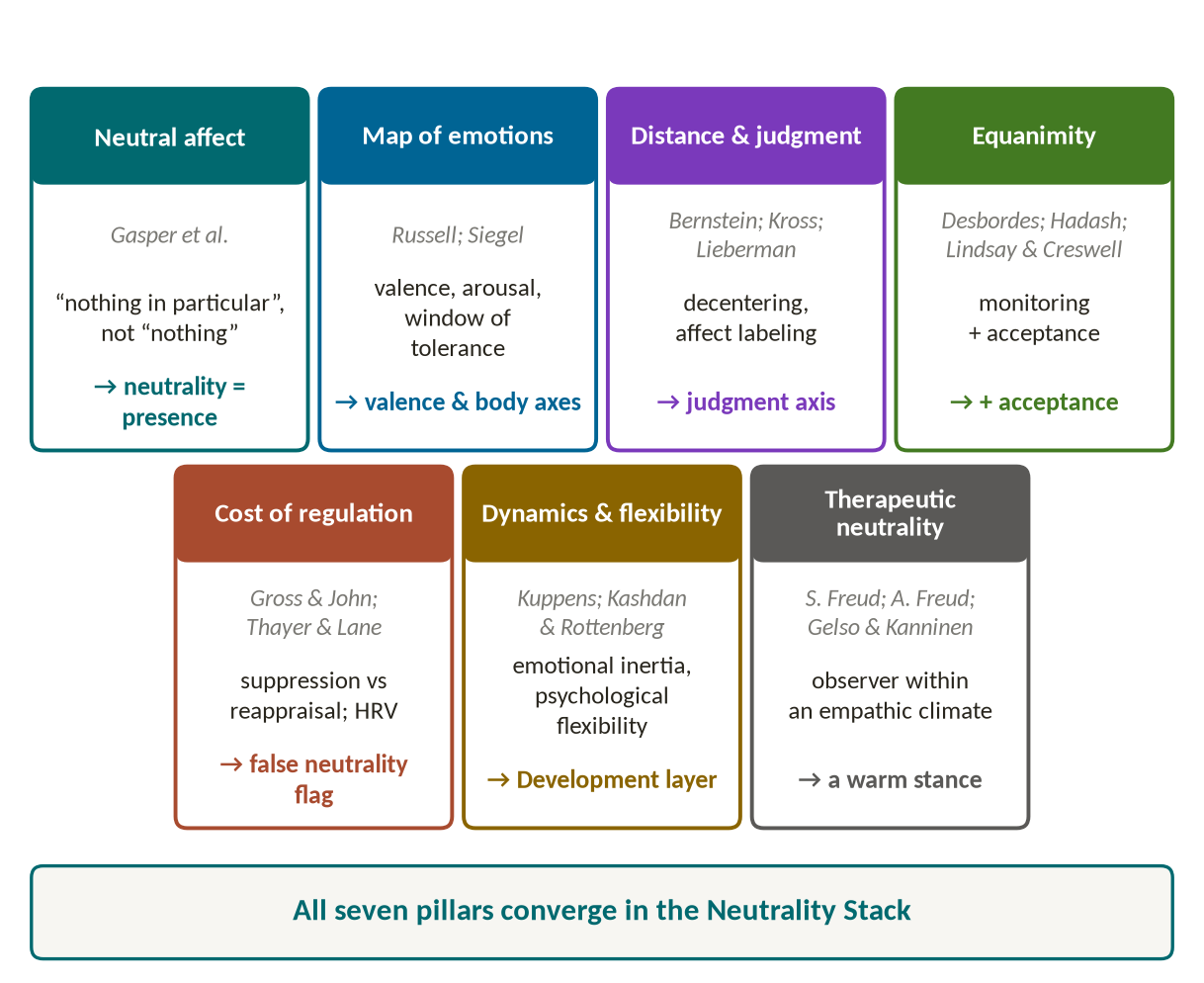
Fig. 2. Seven scientific pillars of the model: each tradition is responsible for its own part
1. Neutral affect exists. It is an experience of “nothing in particular,” not “nothing”; it differs from numbness and indifference and requires cognitive resources (Frontiers in Psychology). So neutrality can be measured on its own — and it has a dangerous double.
2. The map of emotions. Any emotion can be placed on the axes “pleasant — unpleasant” and “calm — aroused” (Russell, 1980). Siegel’s “window of tolerance” describes a safe range of arousal, above which lies panic and below which lies emptiness (Window of Tolerance).
3. Distance and naming feelings. Simply labeling an emotion reduces activity in the amygdala — the brain’s “alarm system” (PubMed). Looking at a situation from the outside lowers both emotional and cardiovascular reactivity (Ayduk and Kross, 2010).
4. Equanimity. An even-minded attitude toward all experiences, regardless of their tone, is studied as an outcome of practice in its own right, and validated scales exist for it (PMC; Mindfulness).
5. The cost of regulation. Reappraisal is linked to better well-being and relationships, suppression to worse (PubMed). From the outside, suppression looks like calm — so the model must tell them apart.
6. Dynamics. Emotional inertia — getting “stuck” in a state — is associated with psychological maladjustment (PMC), while psychological flexibility is considered a fundamental aspect of health (PubMed).
7. Therapeutic neutrality. From Freud to contemporary authors, it is the stance of an observer who does not get drawn into the struggle but remains warm (Åbo Akademi).
 |
THE MOST IMPORTANT FINDING Lindsay and Creswell’s Monitor and Acceptance Theory shows that attentive self-monitoring alone can amplify the stress response, while acceptance softens it (PubMed; Mindfulness, 2024). “I see that I’m angry — and I get even angrier.” That is why, in our model, awareness without acceptance does not count as neutrality. |
|---|
 |
AN HONEST NOTE ON EVIDENCE Popular letting-go practices are useful, but their scientific base varies. EFT, for example, has meta-analyses showing large effects (PMC), yet critics found no specific contribution of the tapping itself (OUCI). That is why every practice below is tagged with a level: A — well-studied mechanisms, B — mixed evidence, C — practitioners’ proprietary methods. |
|---|
Why this matters especially today

Fig. 3. The eye of the storm: around it, a whirlwind of notifications and news; at the center, silence
Emotional strain has become widespread. According to the WHO, more than a billion people live with mental health conditions, most often anxiety and depression, and these two alone cost the global economy about a trillion dollars a year.
Algorithms pay for leaving the center. Each moral-emotional word in a message increased its spread by about 20% (PNAS). Anger and outrage quite literally sell better.
Polarization is growing. The partisan gap in Americans’ feelings toward the federal government has become the largest since 1997 (Pew Research Center).
Overload eats up resources. Neutrality requires attentional resources (Frontiers in Psychology). A person with hundreds of notifications a day loses it not because they “can’t control themselves,” but because they have nothing left to hold it with.
 |
THE MAIN IDEA The digital environment rewards leaving the center — for anger, outrage, capture. That is why neutrality today is not a character trait “for the chosen few” but a mental hygiene skill, like sleep or exercise. And like any skill, it can be seen, tracked, and trained. |
|---|
The Triadic Intelligence approach
Triadic Intelligence starts from a simple idea: any complex phenomenon becomes understandable if you look at it from three interconnected sides at once.
• MIE — Matter, Information, Energy. What is the phenomenon made of? Where is the body, where is the meaning, where is the force?
• WWH — What, Whither, How. What is happening now? Where is it heading? In what way is it moving?
• SFD — Structure, Function, Development. How is it built, how does it work, and how does it change?
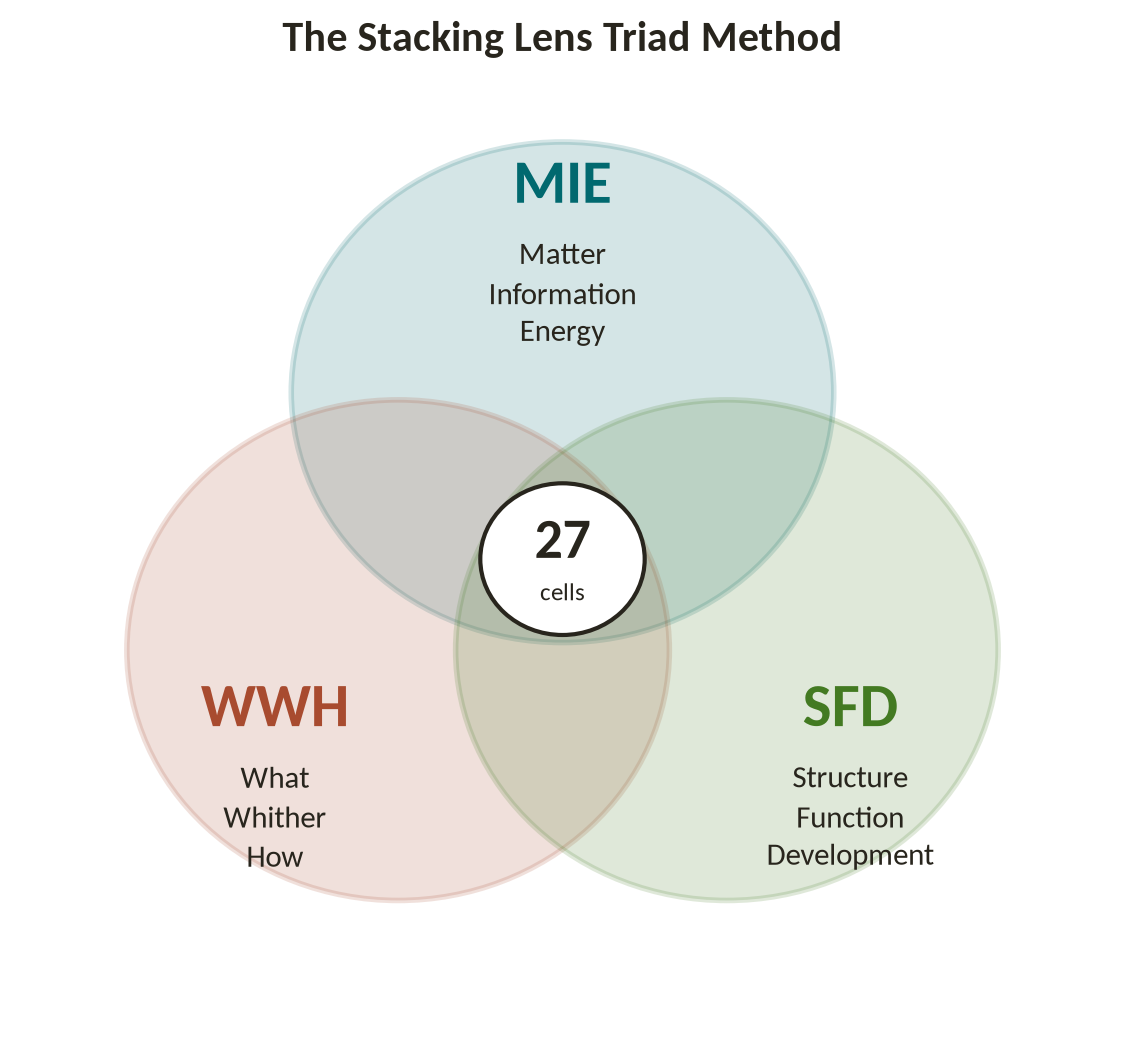
Fig. 4. The Stacking Lens Triad Method: three lenses of three elements each give 27 cells of analysis
When the lenses are stacked on top of each other — hence the name Stacking Lens Triad Method — we get a three-dimensional picture of 27 cells. And the key concept of the method is harmony: a system is stable when its parts are not merely strong but proportionate. A strong but lopsided triad breaks just as easily as a weak one.
|
TRIADIC INSIGHT Instead of one flat question — “Am I neutral?” — we ask three: Where am I relative to the center? How am I there — present or absent? How quickly do I return when I get carried away? |
|---|
Three lenses turned on neutrality
MIE: what a reaction is made of
When we get “carried away,” it happens in three places at once. The body — heartbeat, breathing, muscles: from numbness to a storm. Desire — does it pull or push? Meaning — what label am I sticking on it: “enemy,” “unfair,” “sacred”?
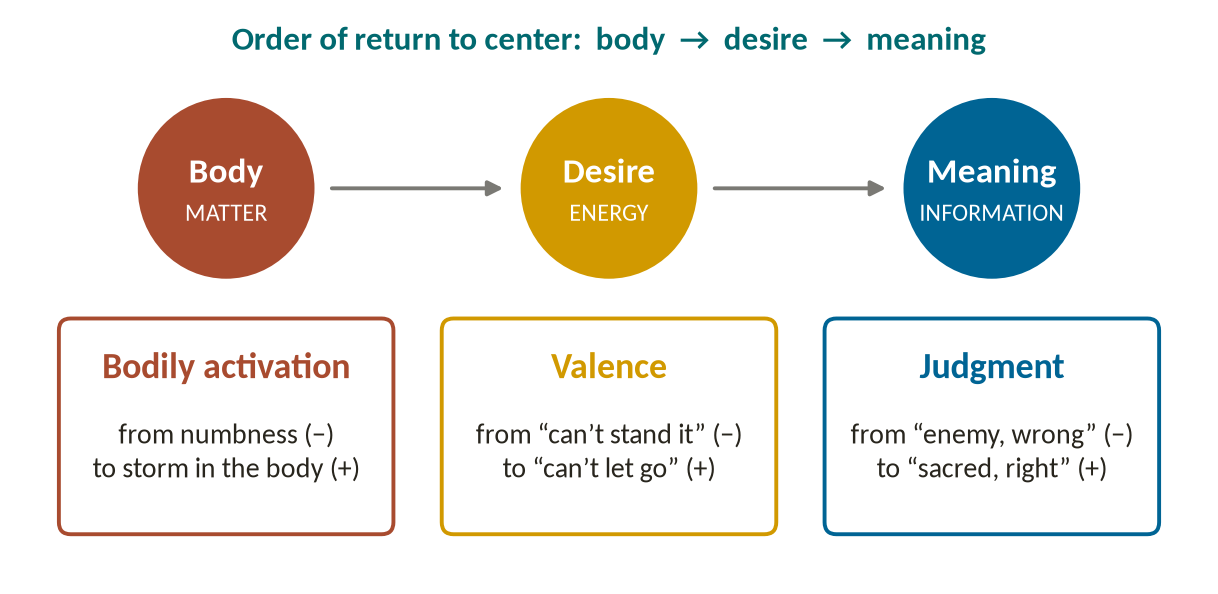
Fig. 5. The three domains of a reaction through the MIE lens and the order of return to the center
Importantly, each axis can be broken in both directions. Delight pulls you out of the center just as outrage does; strong attraction, just as strong aversion. And the order of return is always the same: body first, then desire, then meaning. In a storm, thoughts simply cannot be heard.
WWH: neutrality is a home base, not a place to live
A healthy psyche does not live in the center all the time. An athlete at the starting line needs high activation; a person in grief needs sadness. The WWH lens asks: where am I now, what state does this situation call for, and by what route will I return once the task is done?
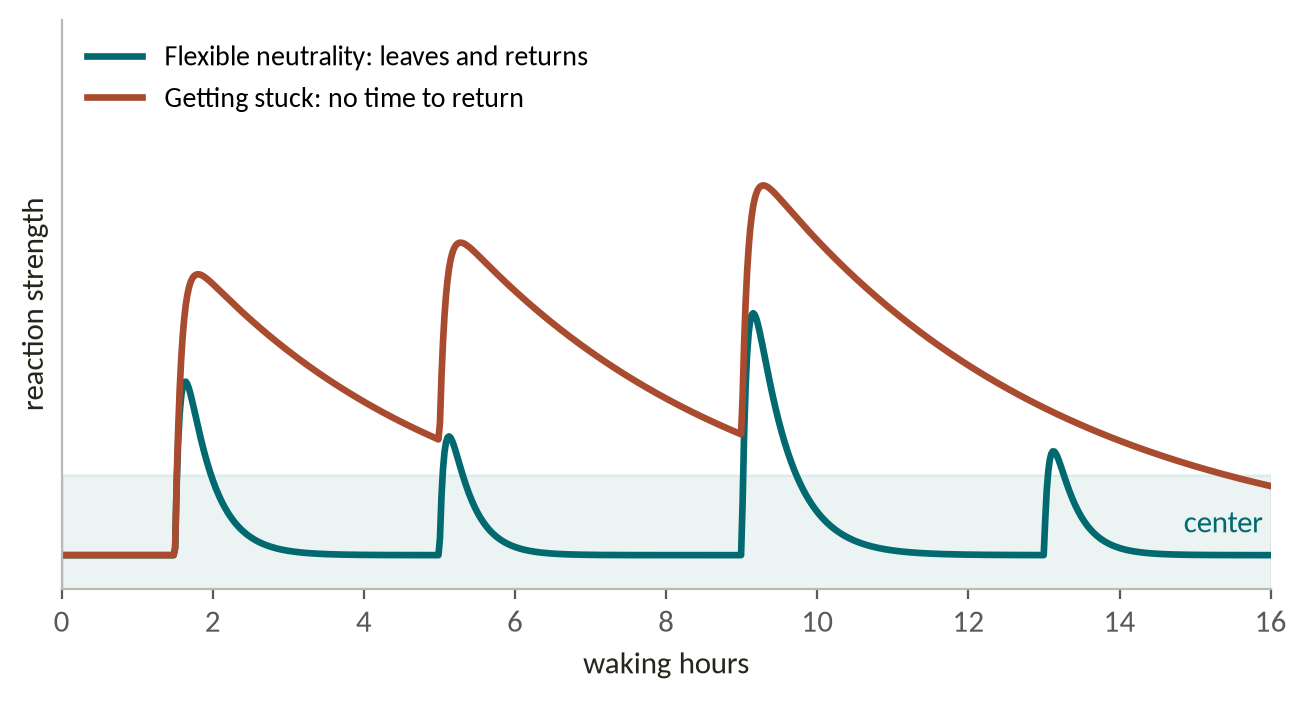
Fig. 6. Flexible neutrality (teal) means leaving and returning quickly. Getting stuck (red) is when a new wave arrives before the previous one has passed
Neutrality is a home base, not a place to live.
SFD: three layers of one picture
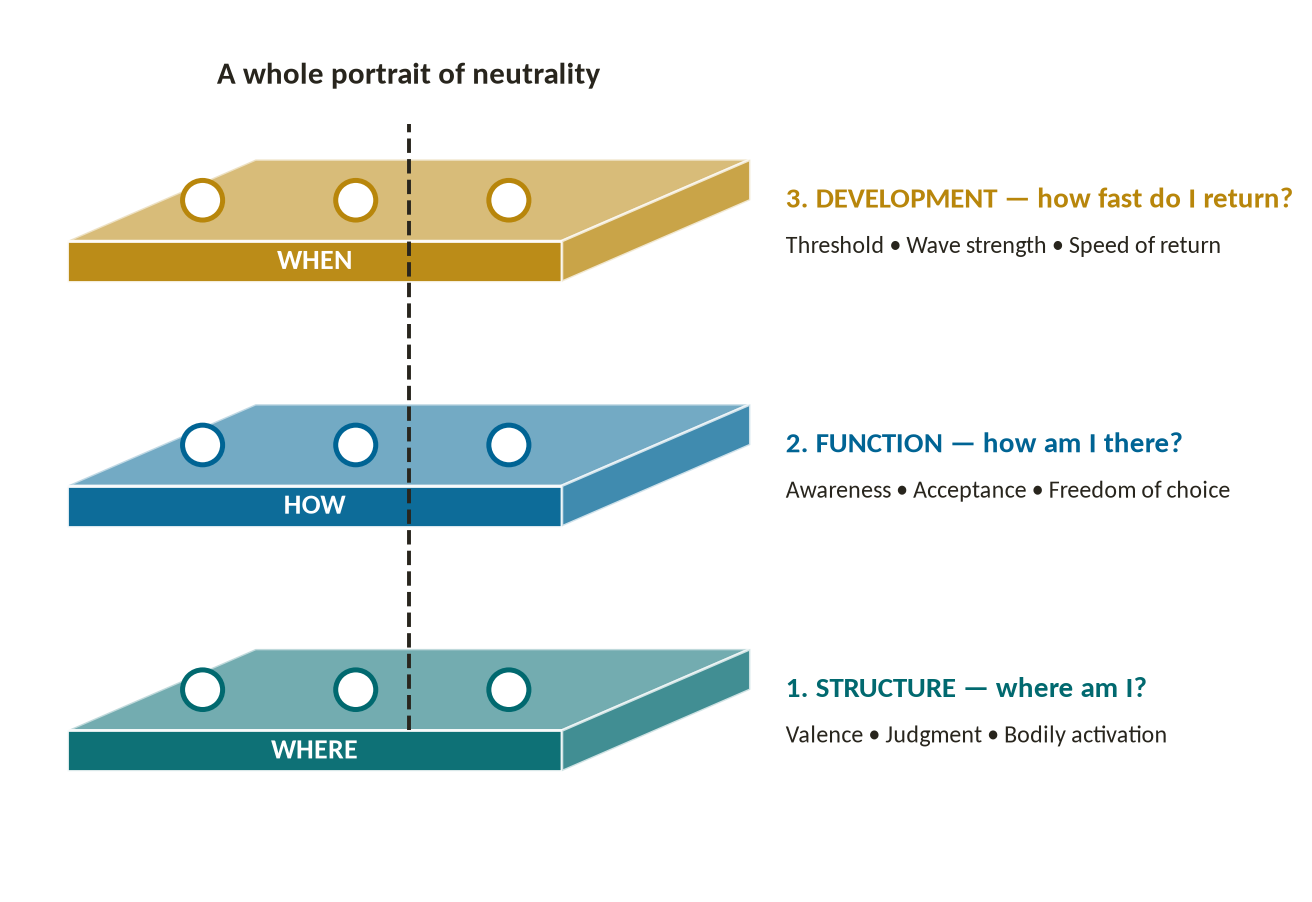
Fig. 7. The neutrality stack: where I am, how I am there, and how quickly I return
Layer 1. Where I am
The first layer is the coordinates of a reaction: how strongly I am pulled or pushed, how categorical my judgment is, and what is happening in my body. One strong deviation matters more than three weak ones: if my body is shaking, I have been carried away, even if “on average” things look fine.
 |
ANNA Anna is 38 and manages a small department. Her boss often criticizes her in front of everyone. After another such meeting she had a headache, argued with him in her head all evening, and slept badly. An honest look showed that all three axes were “burning” at once — aversion, the label “he is unfair,” and heat in the body. This is not just anger but being captured by anger. A month later, a similar situation looked different: still unpleasant, “he got carried away, but he has a point,” slight tension in the shoulders. The feelings had not disappeared — they had simply stopped holding the wheel. |
|---|
Layer 2. How I am there
You can stand in the center in different ways: alive and clear — or turned to stone. The second layer looks at the quality of neutrality through three links: awareness (“I notice what is happening inside me”), acceptance (“I allow it to be”), and freedom of choice (“I can act on my values rather than on impulse”).
These links cannot replace one another. High acceptance will not help without freedom of choice, and clear observation without acceptance, as we already know, can even amplify a reaction. If one link has nearly vanished, quality vanishes too.
|
IGOR Igor is 45 and has gone six months without a vacation. When his wife asks about moving, he answers: “I don’t care.” No judgments, no wants, just a heavy body. On the outside — complete calm, and a simple “calmness scale” would call him quite neutral. But look closer: he vaguely notices what is going on with him, pushes feelings away, and can barely choose anything. He is at the center, but he is not there. This is false neutrality — and recognizing it is why the model needs a second layer. |
|---|
 |
THREE TRAPS OF FALSE NEUTRALITY • Suppression — “I’m calm” through clenched teeth, a stone-stiff body. Start by naming the feeling and allowing it to be. • Numbness — emptiness and sluggishness. Start with gentle bodily activation: movement, rhythm, contact. • Cold indifference — a clear view without warmth. Bring back empathy: “What is this person feeling?” If false neutrality persists for weeks, it is a reason to see a professional: burnout or depression may be behind it. |
|---|
The balance cube: 27 states around the center
What remains is to understand where exactly we are carried. If each of the three axes is divided into “minus,” “center,” and “plus,” we get a cube of 27 cells. The central cell is neutrality; the other 26 are different ways of leaving it. This is the same 27-cell principle as in the Stacking Lens method, only applied to the space of reactions.
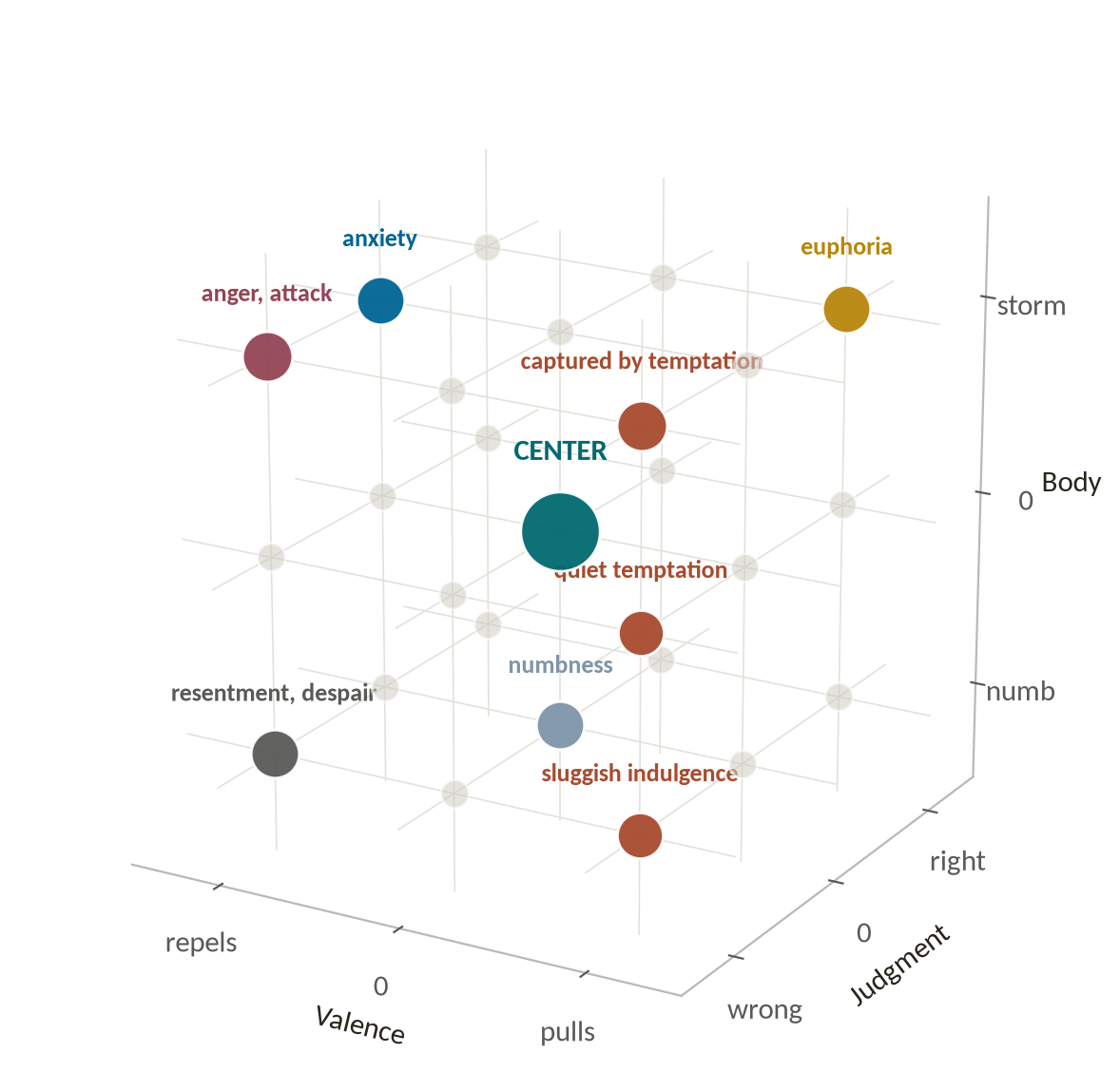
Fig. 8. The balance cube. The large teal sphere is the center; the “sin zone” — pleasant but wrong — is highlighted in red
| Direction of departure | State | How it shows up |
|---|---|---|
| repels • wrong • body on edge | Anger, attack | Shouting in an argument |
| repels • — • body on edge | Anxiety, fear | Waiting for test results |
| pulls • wrong • body on edge | Captured by temptation | “Just one more bet” |
| pulls • wrong • sluggish | Sluggish indulgence | Scrolling at 2 a.m. |
| pulls • right • body on edge | Euphoria, idealization | Infatuation with an idol |
| — • — • numbness | Apathy | “I don’t care” |
|
HOW TO USE THE CUBE A cell shows direction, not strength: “anger” can be mild irritation or rage. And it suggests where to start: if the body is “burning,” start with the body; if something pulls or pushes, work with desire; if there is a harsh label, work with meaning. |
|---|
Sin as a special case
A special place in the cube belongs to the cells where desire and judgment pull in opposite directions: “pleasant but wrong” and “unpleasant but right.” These are points of inner split. In our article on digital sins (digital sins checklist), we studied the first of them. Now it is clear that sin is just one of the zones of leaving neutrality, and the neutrality model includes the sinfulness model as a special case.
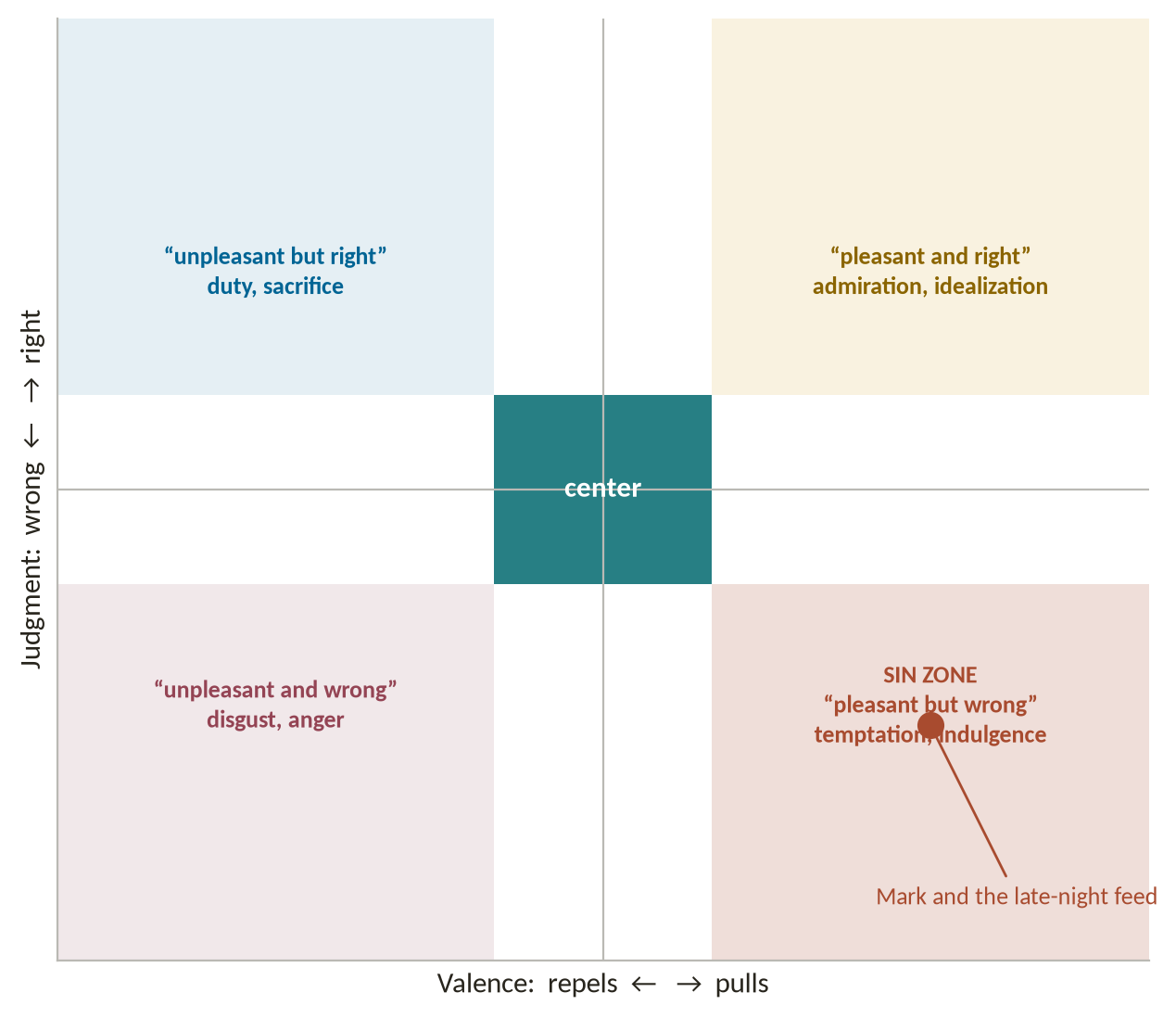
Fig. 9. The “valence — judgment” plane. The sinfulness model sees one corner; the neutrality model sees them all
|
MARK Every evening Mark promises himself to go to bed at 11 p.m., and every evening at half past midnight he is still scrolling his feed. It is pleasant — and he himself considers it wrong. Mark’s discovery: the problem is not “weak will” but a split. He can work on both sides: reduce the pull (take the phone out of the bedroom) and soften the self-condemnation, which is exhausting in itself. |
|---|
Layer 3. How quickly I return

Fig. 10. A gyroscope: the rings swing, but the center stays level
What matters is not only how far we are carried away, but how long we stay “stuck” (PMC). The third layer looks at three things: the threshold (how strong a trigger must be), the strength of the wave, and the speed of return. One person flares up instantly but lets go quickly; another flares up weakly but cannot calm down all day. They need different training.
After a month of practice, Anna’s return time shrank from forty minutes to a quarter of an hour. This is a typical picture: speed of return trains fastest of all, while the threshold grows more slowly because it depends on deeper things — beliefs, experience, fatigue.
Harmony of the layers
Triadic Intelligence always asks: are the parts proportionate? A person may “stand” well but be poorly “present,” or return quickly but not notice their states. A skew in one layer makes the whole structure unstable. And there is the opposite trap — “the harmony of poverty”: everything is even, but weak. Exhaustion often looks like this. Harmony without strength is not neutrality but fatigue.
Drivers: what knocks us out of the center
Why are some people thrown by criticism and others by uncertainty? The Sedona Method describes four basic wants: approval, control, security, and separation (evidence level C). In triadic logic, security relates to Matter, control to Energy, and approval to Information. Knowing your leading driver means knowing in advance where you are thin-skinned.
How to return to the center
The value of the model is that it suggests what to do. The order is always the same: body → desire → meaning → choice.
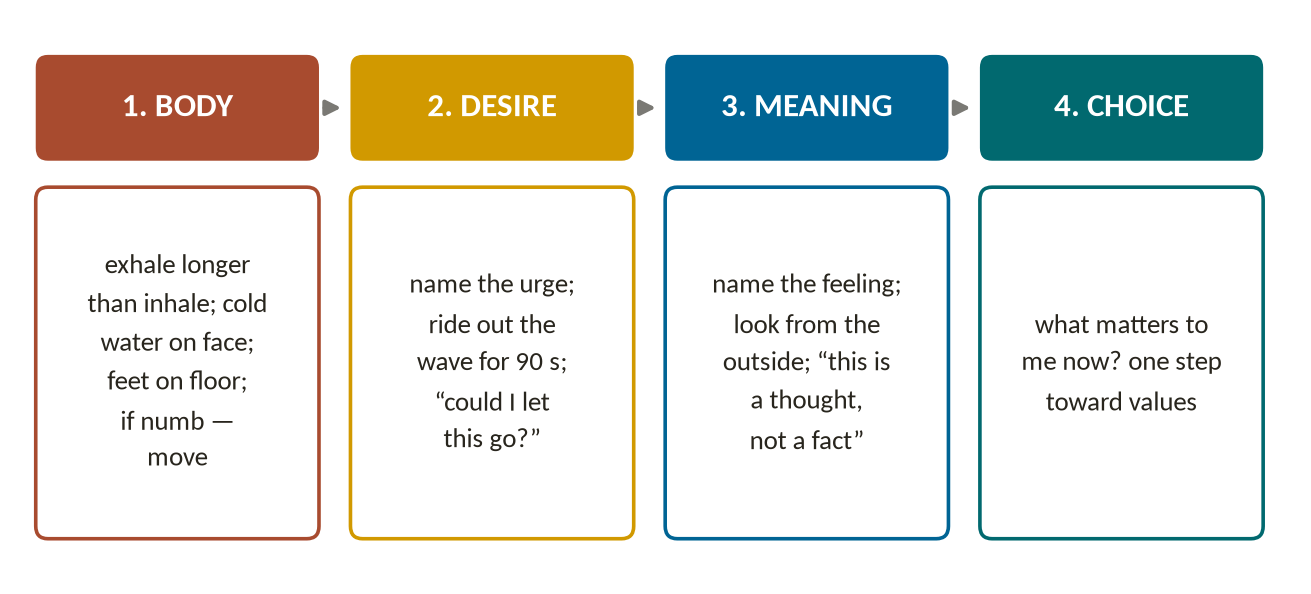
Fig. 11. The protocol for returning to the center: four steps following the MIE lens, plus choice
| Step | Practice | Level |
|---|---|---|
| Body | A long exhale; cold water on the face; “5-4-3-2-1” grounding; if numb — movement and rhythm | B |
| Desire | Name the urge (“I feel pulled to snap back”); ride out the wave for 90 seconds without acting | A / B |
| Desire | The letting-go question: “Could I allow this to be? Could I let it go?” | C |
| Meaning | Name the feeling in one word (PubMed); describe the situation in the third person (Ayduk and Kross) | A |
| Meaning | “This is a thought, not a fact”: “I notice the thought that he is unfair” | A |
| Choice | “What matters to me right now? What small step leads there?” | A |
|
WHEN PROFESSIONAL HELP IS NEEDED If numbness persists for weeks, gives way to despair, or thoughts of self-harm appear, this is not a reason to “train neutrality” but a reason to see a psychotherapist or a doctor. The model is a tool for self-observation, not for diagnosis. |
|---|
Five weeks with Elena
Let’s return to Elena. She is 44 and heads a sales department: “By day I fight at work, in the evening with the news, at night I can’t put my phone down.” She is not in crisis — she simply wants to get her footing back.
 |
WHAT THE FIRST WEEK SHOWED • The weak link is the news. The strongest reaction with the lowest quality: for Elena it is not information but a battlefield. • Social media is a false-neutrality trap. The evening feed looks like rest, but the body slides into sluggishness, and inside it is “pleasant but wrong.” • Body and health are a resource. Here the center already exists, and it can become an “anchor.” • The route is always the same. When Elena is carried away, she is carried into fighting. This is not chance but a habitual road. |
|---|
|
PSYCHOTHERAPIST’S COMMENT Elena’s weakest link is acceptance. She gets angry, and then gets angry at herself for being angry. This “second wave” is often longer than the first. And another classic picture: “I know, but I can’t do it” — her values are clear, but in the moment she cannot lean on them. This is good news: there is no need to rebuild the personality; the skill needs training. |
|---|
| What Elena did | Why |
|---|---|
| A long exhale after every meeting | Start with the body — where she is carried away most often |
| News once a day, as text | Relieve the weakest link |
| Phone out of the bedroom after 10:30 p.m. | Disarm the evening-feed trap |
| “I notice the thought that…” | Loosen harsh labels |
| “I’m allowed to be angry. I decide what to do next.” | Strengthen acceptance |
| A daily walk | Lean on the resource zone |
 |
WHAT CHANGED A MONTH LATER • Four of the six life zones returned to the center window, and the overall “route into fighting” almost disappeared. • Return time after difficult episodes shrank from over forty minutes to about twenty. • The evening feed stopped being “false rest” and became simply a mild pleasure. • The news remained a difficult zone, but the wave became half as strong: the same stance, without the capture. |
|---|
|
PSYCHOTHERAPIST’S COMMENT The most valuable thing is not the numbers but the fact that Elena saw her route. Before, it was “I’m on edge all the time.” Now: “I get carried into fighting, most often through the news and meetings, and I know where to start — with an exhale.” Her disagreement with what is happening in the world is her position, not a mistake. The goal is not to erase the position but to keep it from capturing her body and her day. |
|---|
The goal is not to erase feelings but to make sure they stop holding the steering wheel.
An honest note on limitations
The model is new and needs to be tested. For now it relies on self-report, and the boundaries of the “center” were chosen on conceptual grounds rather than from large-sample data. The next steps are a pilot with 50–100 people, comparison with validated equanimity scales (Mindfulness; PMC), testing stability on repeat measurement, and searching for objective markers such as heart rate variability (PMC). The model does not replace a clinical assessment of anxiety, depression, or trauma.
A one-minute pause
 |
TRY IT RIGHT NOW Recall a recent situation that threw you off balance. Not the hardest one — just a recent one. 1. Did it pull or push you — and how strongly? 2. What label did you put on it: “enemy,” “unfair,” “that’s not allowed”? 3. What was in your body: a storm, tension, emptiness? 4. Which of the three was strongest? That is where your return begins: body, desire, or meaning. That’s it. You have just looked at your reaction through three lenses for the first time. |
|---|
What comes next
This model is the foundation for a web tool to diagnose and train psychological neutrality, where a short measurement takes a minute and the cube and profile are built automatically. It will continue the series of works on Triadic Intelligence — alongside the digital sins checklist and the psychological charge model. They all answer one question: how to stay whole in a world that constantly pulls in different directions.

Fig. 12. A compass whose needle points not north but to the center
We cannot stop the storm. But we can learn to return to its quiet center.
Further reading and sources
• Zolotov, A. Triadic Intelligence: Designing Reality With the Lens Triad; digital sins checklist and materials at alexz.us.
• Gasper, K., Spencer, L. A., Hu, D. (2019). Does Neutral Affect Exist? — Frontiers in Psychology.
• Gasper, K. (2023). A Case for Neutrality — PMC.
• Desbordes, G., et al. (2015). Moving beyond Mindfulness: Defining Equanimity — PMC.
• Confirmation and Validation of the Equanimity Scale-16 (2022) — Mindfulness; EQUA-S — PMC.
• Lindsay, E. K., Creswell, J. D. (2017). Monitor and Acceptance Theory — PubMed; daily stress reactivity (2024) — Mindfulness.
• Russell, J. A. (1980). A Circumplex Model of Affect — PDF; Siegel, D. Window of Tolerance — overview.
• Lieberman, M. D., et al. (2007). Putting Feelings Into Words — PubMed.
• Bernstein, A., et al. (2015). Decentering and Related Constructs — Perspectives on Psychological Science.
• Ayduk, Ö., Kross, E. (2010). Spontaneous Self-Distancing — PDF.
• Gross, J. J., John, O. P. (2003). Two Emotion Regulation Processes — PubMed; neurovisceral integration and HRV — PMC.
• Kuppens, P., et al. (2010). Emotional Inertia — PMC; Kashdan, T. B., Rottenberg, J. (2010). Psychological Flexibility — PubMed.
• Gelso, C. J., Kanninen, K. M. (2017). Neutrality Revisited — Åbo Akademi.
• Clinical EFT: a systematic review — PMC; a critique of the meta-analysis — OUCI.
• WHO (2025) — WHO; Brady, W. J., et al. (2017) — PNAS; Rathje, S., et al. — Perspectives on Psychological Science; Pew Research Center (2025) — Pew.